Ask for the Next Appointment Before They Walk Out
Rebooking at checkout is the highest-converting moment in your client's visit. Here's how to build it into your front desk process so it actually happens.
TL;DR: The moment a client pays is when they're most satisfied and most open to coming back. A front desk that doesn't ask for the next appointment at checkout is handing future revenue to chance. Build the ask into your checkout flow and your rebooking rate will climb without a single extra marketing dollar.
Most rebooking happens — or doesn't happen — in a 60-second window. The client is happy, the service is fresh, and the front desk is right there. If nothing gets scheduled before they reach the door, that client becomes a text campaign, a lapsed-client win-back attempt, or a gap in next month's books.
This isn't a sales tactic. It's a service habit. Clients who rebook at checkout spend less time waiting to find an opening later, and they're less likely to drift to a competitor in the gap. Your front desk benefits too: fewer inbound calls, fewer open slots to fill on short notice, and a schedule that actually reflects demand.
Why Checkout Is the Right Moment
Client satisfaction peaks right after a service. They can see the result, they feel good, and they haven't yet returned to the stress of their day. That window closes fast.
Once they leave, friction accumulates. They mean to call back. They get busy. They notice a competitor's promotion. They forget who did their last treatment. Every day between checkout and rebooking is a day for that intention to evaporate.
The front desk has a structural advantage at this moment: the client is already standing there, card in hand, satisfied. Compare that to what it costs to re-engage them later — SMS credits, promotional discounts, time spent on lapsed client win-back campaigns. The checkout ask is free.
Build the Ask Into the Checkout Flow
Rebooking at checkout fails most often not because clients say no, but because nobody asks. The front desk is juggling the payment terminal, the phone, and three other things. The ask gets skipped.
The fix is to make the ask structural, not optional. A few ways to do that:
- Put rebooking before payment confirmation, not after. Once the receipt prints, the interaction feels closed.
- Give the front desk a default opener they don't have to think about: "Did you want to go ahead and lock in your next appointment?"
- For services with a defined rebooking cadence — color every eight weeks, lash fill every three — pre-fill the suggested date so the desk isn't calculating on the fly.
- Track rebooking rate per provider and per service, not just overall. A stylist with a 30% rebook rate needs a different conversation than a service that consistently rebooks at 70%.
The goal is a checkout where scheduling the next visit is a normal part of the sequence, not an afterthought.
What the Software Has to Support
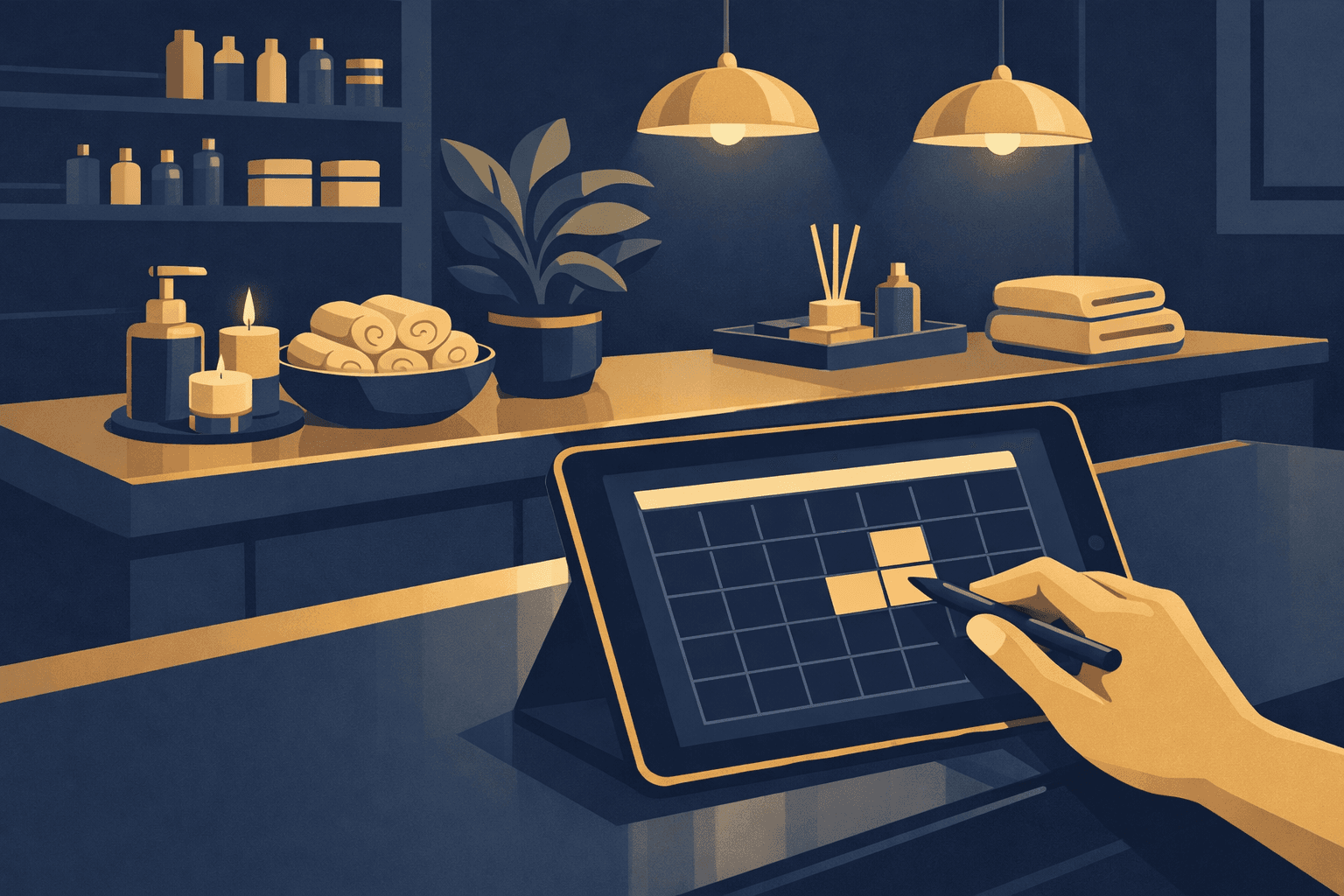
A good checkout flow breaks down fast if the calendar is slow, the search is clunky, or the front desk has to navigate through multiple screens to find an open slot. Software friction at the register is one of the main reasons the ask gets skipped.
At minimum, your system needs to:
- Surface the current client's last appointment date and service so the desk knows exactly what to rebook
- Show provider availability without leaving the checkout screen or with minimal navigation
- Allow booking confirmation in under 30 seconds
Platforms like Vagaro and Boulevard both support checkout-adjacent booking. The difference is usually in how many clicks it takes and whether the front desk actually uses the feature. If the flow requires three screen transitions, it won't happen during a busy checkout rush.
A client management system that keeps visit history, service notes, and upcoming availability in one view removes the friction that causes the ask to get skipped in the first place.
When the Front Desk Is Pulled Away
Even when the checkout flow is solid, the phone rings. A walk-in shows up. Another client needs something. The front desk gets pulled, and the client who just paid slips out while a conversation is still happening somewhere else.
This is where phone coverage during checkout matters directly. If the desk is answering a call while processing a payment, something gets shortchanged. Usually it's the rebooking ask.
Operations that manage this well do a few things consistently:
- Separate the checkout station from the reception phone line when staffing allows
- Use a hold script so incoming callers wait rather than pulling the front desk mid-checkout
- Route after-hours and overflow calls so they don't compete with live clients standing at the register
The priority during checkout should be the person in front of you. That client's next appointment is worth more than most inbound calls in that moment.
Rebooking Offers vs. Plain Asks
Some businesses attach an incentive to the checkout rebook: a small discount, a loyalty point, a free add-on at the next visit. These can work, but they carry a cost.
If clients learn that rebooking at checkout always comes with a perk, you train them to expect it. Margin erodes. And clients who were going to rebook anyway now rebook with a discount they didn't need.
The plain ask — no incentive, just a confident offer of a specific date — converts well on its own when the timing is right and the service was good. Save the offer for clients who hesitate or for slower seasonal periods when you actually need to pull demand forward.
The stronger long-term play is making the rebook feel easy and obvious, not making it feel like a deal.
What a Rebook Rate Actually Tells You
If you're tracking rebooking at checkout, you have a direct read on client satisfaction and front desk execution at the same time.
A low rate by a specific provider often signals a service experience issue — clients aren't confident enough in the result to commit to coming back. A low rate across the whole desk during certain hours signals a staffing or volume problem: too many things competing for the front desk's attention.
High overall rebooking paired with long gaps between visits points to a cadence problem. Clients are rebooking, but booking too far out, which leaves them vulnerable to cancelling before the appointment arrives.
Use the data to ask the right question. A rebook rate number on its own is just a number. Broken down by provider, service type, and time of day, it tells you where the process is working and where it's leaking.
Frequently Asked Questions
What is rebooking at checkout?
Rebooking at checkout means scheduling a client's next appointment before they leave, at the point of payment. It's the highest-conversion moment in the client visit because satisfaction is at its peak and the client is already engaged with the front desk.
How does rebooking at checkout affect no-show rates?
Clients who rebook at checkout typically have lower no-show rates than clients who book days or weeks later. The commitment is fresher and made in a context of positive experience rather than a cold follow-up call or text. Pairing the rebook with a confirmation reminder before the appointment reinforces the commitment.
What should the front desk say to ask for the next appointment?
A direct, low-pressure opener works best: "Did you want to go ahead and lock in your next appointment before you leave?" Avoid framing it as optional preamble ("I don't know if you're interested, but..."). A confident, specific ask — especially with a suggested date already in mind — converts more reliably than an open-ended one.
How do I track rebooking at checkout across my team?
Most booking platforms let you pull appointment source data by provider and date range. You want the number of checkouts in a period against the number of appointments booked during or immediately after those checkouts. If your system doesn't surface that natively, you can approximate it by comparing completed appointments to new bookings made the same day, segmented by provider.