Why Calls Don't Always Convert to Bookings
Your call-to-booking conversion rate matters more than ad spend. Here's why calls drop off and how voice AI closes the gap for appointment businesses.
TL;DR: Most appointment businesses lose bookings not because callers aren't interested, but because someone didn't answer, put the caller on hold, or couldn't give a clear price and confirm a slot in one call. Voice AI closes this gap by handling the full booking conversation in real time, 24 hours a day, without a hold queue.
You paid for the lead. The Google ad ran, the phone rang, and someone called your salon or spa ready to book. What happened next determines whether that spend returned anything.
For a lot of appointment businesses, the answer is: not much. The front desk was already with a client. Or the call came in at 7 p.m. Or the person who answered couldn't confirm availability fast enough, and the caller said they'd call back. They didn't. That's not a marketing problem. That's a conversion problem, and it lives entirely inside the phone call.
Call-to-booking conversion rate is the percentage of inbound calls that end with a confirmed appointment. Most operators have never measured it, which means they also don't know how much revenue is walking out through the phone lines every week.
What a Typical Call Looks Like Before It Fails
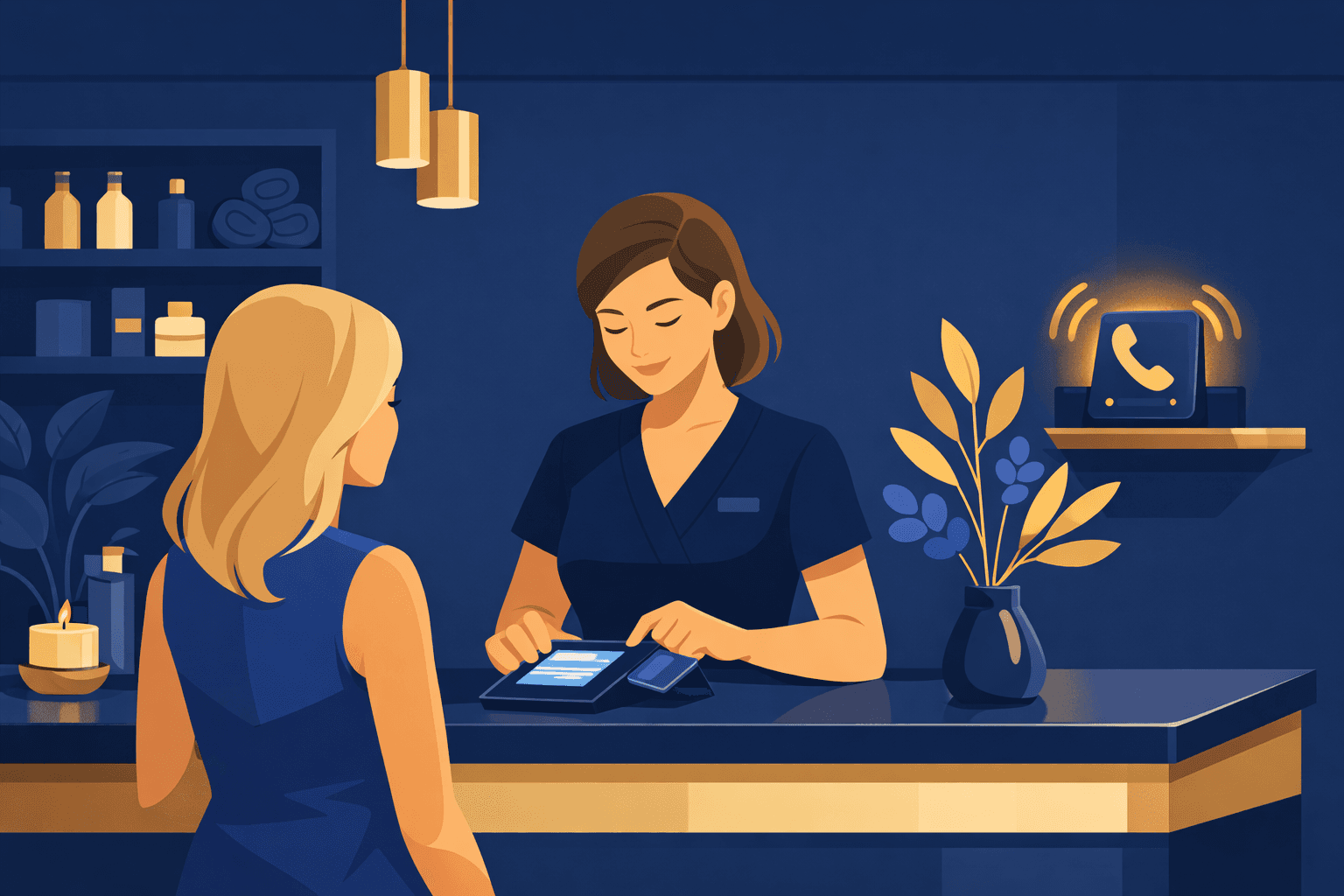
A caller phones a spa or salon with intent. They want a specific service, they have a rough idea of their schedule, and they're ready to give you their name and card number. But the call doesn't land cleanly.
Here's the sequence that kills conversion:
- The phone rings four or five times.
- Someone answers mid-task and puts the caller on hold within 30 seconds.
- The caller waits 90 seconds, sometimes two minutes.
- The staff member returns, checks availability verbally, quotes a price from memory, and tries to confirm a time.
- The caller says they need to check their calendar and will call back.
That last line is almost always the end of it. Voicemail and unanswered calls cost businesses more than most owners estimate, but holds and fumbled conversations are just as damaging — they just leave no record.
The problem isn't that your front desk is bad at their job. They're managing a live client, a checkout, and an inbound call at the same time. That's too many things. Something gives.
Where the Conversion Rate Actually Breaks Down
There are four specific points in a phone call where a booking is lost:
Point 1: No answer. The call goes to voicemail. Most callers in the market for a spa or salon appointment will hang up and try the next result. They don't leave a message, and even when they do, a callback attempt hours later rarely reaches them at the right moment.
Point 2: The hold. A caller who waits more than 60 to 90 seconds on hold has already mentally started looking for an alternative. The hold tells them: this business is hard to reach. That impression doesn't go away after they book.
Point 3: Price uncertainty. If the person answering doesn't know the exact price for a specific treatment — or gives a range that feels evasive — the caller loses confidence. Price ranges are fine on a menu page. On a phone call, they read as unprepared.
Point 4: Slot confirmation taking too long. If confirming a time slot requires navigating a slow system, finding the right provider, or calling back, the caller disengages. Booking intent is highest during the call. It drops quickly after.
Fix those four points and the conversion rate improves materially. Voice AI addresses all of them.
How Voice AI Handles the Booking Call End to End
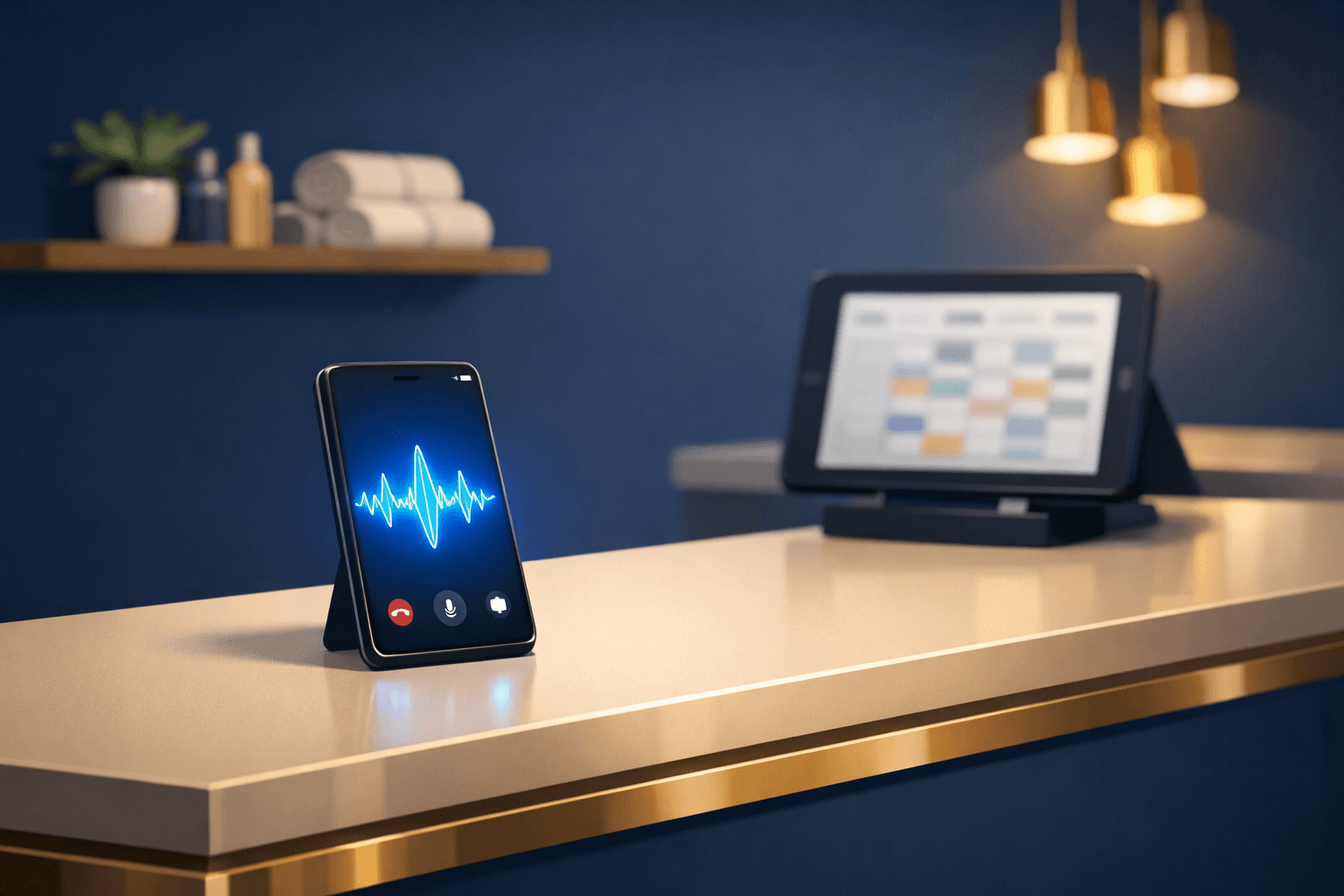
Voice AI isn't a phone tree. It doesn't say "press 1 for appointments." It holds a real conversation, in natural language, from the first ring to the confirmed booking.
Here's what that looks like in practice:
- The call is answered immediately, on the first or second ring, regardless of what else is happening at the front desk.
- The AI asks what brought the caller in and listens to their response. If they say "I want a deep tissue massage, something in the next week or two," the AI confirms the service, quotes the price, and offers available times.
- When the caller picks a slot, the AI collects their name, contact number, and any intake details the business requires — new client versus returning, any health notes the provider needs.
- The booking is confirmed in the same call. A confirmation text goes out immediately.
No hold. No callback. No uncertainty about whether the slot is actually available. The caller came in ready to book and left with an appointment on the calendar.
For after-hours calls, nothing changes on the caller's end. The AI answers the same way at 8 p.m. as it does at 11 a.m. That matters because a meaningful portion of service appointment searches happen in the evening, when front desks are closed and competitor voicemails are filling up. Capturing bookings after hours is one of the cleaner ways to grow without spending more on ads.
Tersavia's AI reception platform handles this entire call flow — answer, quote, confirm, book — with the conversation logged and summarized so the front desk sees exactly what was said when they check in the next morning.
What Conversion Rate Improvement Looks Like in Practice
This isn't about dramatic transformation. It's about closing a gap that already exists.
If your business takes 80 inbound calls per week and 30 of those result in bookings, your call-to-booking conversion rate is 37.5%. That's not unusual. It's also not a ceiling — it's a leakage number.
Of the 50 calls that didn't convert:
- Some went to voicemail
- Some were placed on hold long enough that the caller gave up
- Some ended with "I'll call back"
- Some got a price they weren't confident in
Voice AI doesn't fix every one of those. A caller who had already decided against booking before they dialed isn't going to change their mind because the AI answered quickly. But the callers who were ready and got dropped by friction? Those convert.
Even moving from 37% to 50% on 80 weekly calls is 10 additional bookings per week. At an average ticket of $90 to $120, that's $900 to $1,200 in weekly revenue that was already paid for by your marketing budget and just not collected.
The Front Desk Doesn't Disappear — It Gets Better Work
One concern that comes up often: won't this make the front desk feel replaced?
In practice, the opposite tends to happen. When voice AI handles inbound call volume, the front desk spends less time managing a ringing phone while a client is standing at checkout. The calls that do reach a human are the ones that actually need one: complex scheduling questions, service consultations, complaints that require judgment and care.
Knowing when to transfer a call to a human is part of how a well-configured AI system works. The AI doesn't hold onto calls it can't handle. It recognizes when a conversation has moved past booking logistics and routes it to the right person.
The front desk ends up doing less phone triage and more of the client-facing work that actually builds loyalty. That's a better use of their time, and most staff members recognize it quickly.
FAQ
What is a good call-to-booking conversion rate for a salon or spa?
Most appointment businesses see call-to-booking conversion rates somewhere between 30% and 55%, depending on how well calls are answered and how quickly the booking can be confirmed. Businesses with consistent same-call confirmation tend to sit at the higher end of that range.
Does voice AI work for complex service questions, or only simple bookings?
Voice AI handles straightforward booking conversations well: service selection, pricing, availability, and confirmation. When a caller has a detailed medical question, wants a consultation before booking, or needs something outside the standard service menu, a well-configured system transfers the call to a human rather than guessing.
How does voice AI affect after-hours call-to-booking conversion?
After-hours conversion is typically low with traditional front desks because calls go to voicemail. Voice AI answers those calls the same way it handles daytime calls — with a full booking conversation — so after-hours intent converts at a rate much closer to business-hours performance.
Does using voice AI for bookings require switching my scheduling software?
Not necessarily. Tersavia's voice AI books into Vagaro, Mindbody, and Boulevard. If you're running one of those systems, the AI works alongside your existing calendar without requiring a platform migration.