Rebooking Cadence by Service Type
Every service has a natural return window. Learn the right rebooking cadence by service type so your front desk stops guessing and your calendar fills itself.
TL;DR: Every service has a natural return window, and most businesses either ignore it or treat every client the same. Map your rebooking cadence to the specific service, build it into checkout, and your retention numbers will reflect it within a quarter.
A client who just got a balayage doesn't need to hear "see you in four weeks." A client who just got a Brazilian wax absolutely does. Suggesting the wrong interval makes you sound like you're not paying attention. Suggesting no interval at all leaves money in the hands of whoever texts them first.
Rebooking cadence isn't a retention "strategy" in some abstract sense. It's a property of the service itself, like the appointment duration or the supply cost. Once you know the right window for each service type, the front desk conversation stops being a guessing game and starts being a standard close.
Why One-Size Rebooking Fails
Most booking platforms let you set a follow-up message at a fixed interval. Vagaro, Boulevard, and Mindbody all support some form of automated client messaging. The problem is that operators often configure one interval across all services, or skip the configuration entirely and rely on whoever happens to be at the front desk that day.
The result: clients with a six-week service get nagged at four weeks and feel pressured. Clients with a four-week service get a message at eight weeks, after they've already booked somewhere else. Neither outcome is what you wanted.
The fix isn't more aggressive messaging. It's accurate messaging, timed to when the client is actually starting to think about their next appointment.
Service-by-Service Return Windows
These are the windows that reflect how the service actually behaves on the client's body or schedule. They aren't targets to push; they're the natural moment when a client is ready to rebook.
Color and chemical services (hair)
Root touch-ups: 4 to 6 weeks, depending on how fast the client's hair grows and how much contrast they're comfortable showing. Balayage and highlights: 8 to 16 weeks. Perms and relaxers: 10 to 14 weeks. Clients getting color services are used to longer gaps, so a premature reminder reads as pushy rather than helpful.
Cuts (hair)
Short cuts (including most barbershop fades and tapers): 3 to 4 weeks before the shape is gone. Medium-length cuts: 6 to 8 weeks. Long cuts where the client is growing it out: 10 to 12 weeks, or no structured cadence at all. Barbershops tend to have the shortest and most consistent cadence of any segment, which is why their front desk phone volume is often high relative to their appointment count — regulars call weekly.
Waxing
Brazilian and bikini: 4 weeks, almost without exception. Body waxing (legs, arms, back): 4 to 6 weeks. Facial waxing (brows, lip): 3 to 4 weeks. Waxing clients are among the easiest to put on a recurring schedule because the service timing is dictated by biology, not preference. If you aren't prebooking wax clients at checkout, you're leaving your most rebookable clients unscheduled.
Facials and skin treatments
Maintenance facials: 4 to 6 weeks. Corrective or targeted treatments (acne, hyperpigmentation, anti-aging series): follow the treatment plan interval, which is often 2 to 4 weeks between sessions. Treatment series at med spas require a different structure entirely — the series itself becomes the booking unit, not the individual session.
Massage
This varies more than any other service because clients book massage for different reasons. Chronic pain or injury recovery: every 1 to 2 weeks. Stress management: every 3 to 4 weeks. Occasional treat: no structured cadence is realistic, but a 6 to 8 week check-in message still captures some of them. The mistake here is treating all massage clients the same at checkout. Ask the client what they're coming in for and let that guide the rebooking conversation.
Lashes and brows
Lash fills: 2 to 3 weeks. Full lash sets: every 4 to 6 weeks. Brow tints and laminations: 4 to 6 weeks. Lash clients are second only to wax clients in rebooking predictability. If your lash artists aren't prebooking fills at checkout, your calendar is unstable by design.
Nail services
Gel manicures: 2 to 3 weeks. Regular manicures: 1 to 2 weeks. Pedicures: 4 to 6 weeks. Nail clients often have a strong preference for a specific technician, which means they'll self-schedule if they know when they need to come back. Your job is to give them the interval so they don't have to calculate it.
Laser and energy-based treatments
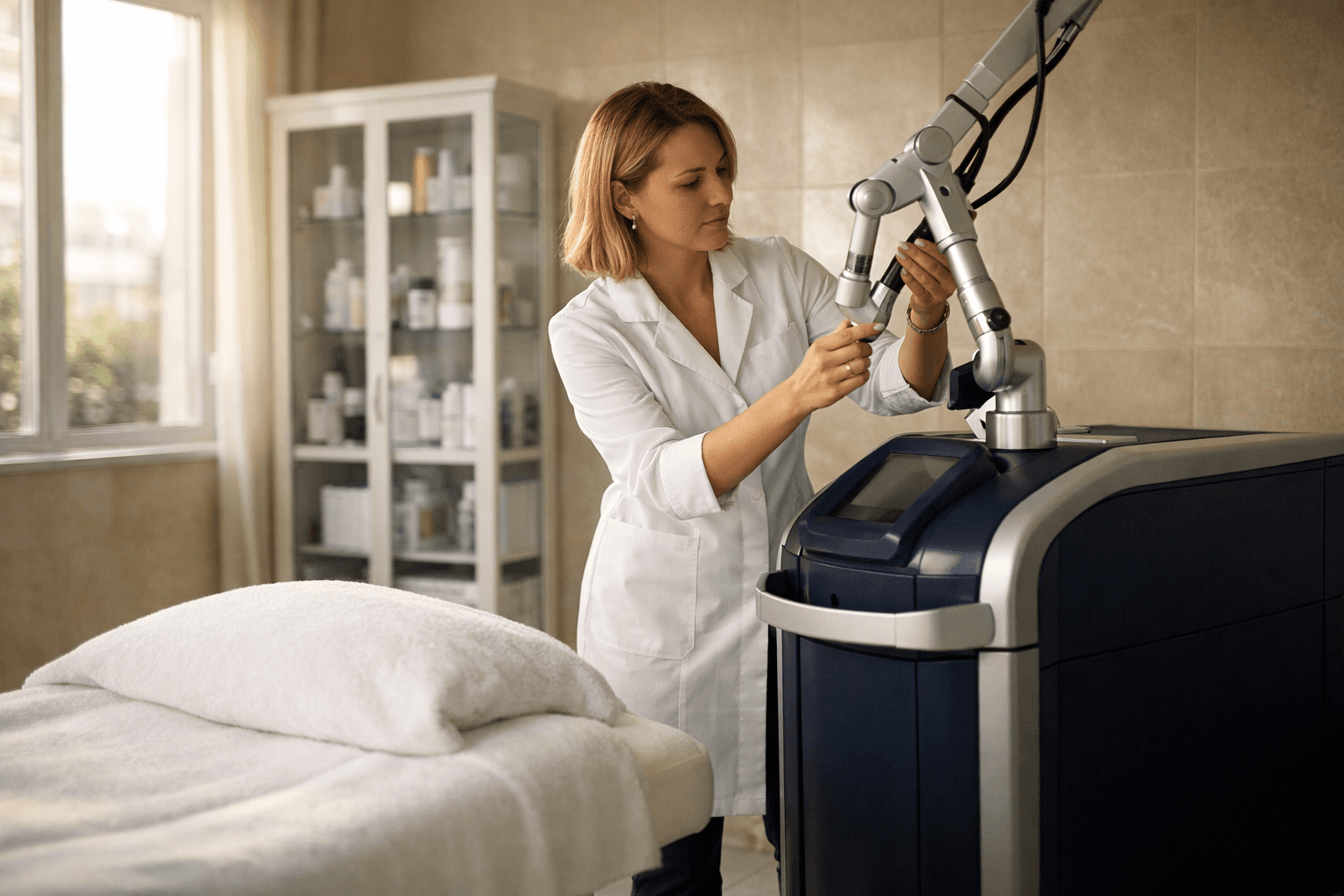
Hair removal: session spacing depends on the treatment area and the device protocol, but typically 4 to 8 weeks. Laser session spacing is protocol-driven, not preference-driven, and should be handled as part of a pre-sold series rather than a rolling rebooking conversation. Skin treatments like IPL and RF: 4 to 6 weeks between sessions within a series, with a longer maintenance interval afterward.
How to Build Cadence Into Checkout
Knowing the interval is only useful if it changes what your front desk says at checkout. Here's how to operationalize it:
- Add the recommended rebooking window to each service in your booking software. Most platforms support service notes or internal descriptions that staff can reference.
- Script the checkout close around the interval, not around a vague "you should come back soon." Something like: "For Brazilian wax, most clients come back in four weeks. Want to grab a spot now so you have it?"
- Configure automated follow-up messages to fire at the correct interval per service category, not at a blanket number of days. This is where the platform configuration matters — if your system only lets you set one global interval, you're leaving precision on the table.
- For series-based services (laser, corrective facials, injury massage), the rebooking conversation should happen at the first appointment, not the last. Sell the series, schedule the sessions, and the cadence manages itself.
The Tersavia client management system lets you attach notes and service history to each client record, which makes cadence tracking practical without relying on staff memory.
When Clients Don't Rebook at Checkout
Not every client will prebook. Some genuinely don't know their schedule. Some resist the pressure. That's fine — the cadence still applies, it just moves to your follow-up sequence.
For clients who don't prebook:
- Send a personalized message at the service-specific interval, not a generic "we miss you" at 90 days.
- Reference the service they received: "Your lash fill from six weeks ago is probably ready for a refresh."
- Include a direct booking link so the friction between reading the message and scheduling is as low as possible.
Double booking and scheduling gaps often come from uneven demand, and a consistent rebooking cadence smooths that out. When clients return on a predictable schedule, your calendar becomes forecastable instead of reactive.
FAQ
Q: How do I know if my rebooking cadence is off for a specific service?
A: Look at the average gap between appointments for that service in your booking history. If clients are regularly returning later than the natural service interval, your follow-up timing or checkout conversation needs adjustment. If they're returning earlier, the interval you're suggesting may be too aggressive.
Q: Should every service have a scripted rebooking close at checkout?
A: Yes, but the script should be short and specific, not a sales pitch. One sentence that states the recommended interval and asks if they want to book it now is enough. Clients who are ready will say yes. Clients who aren't won't feel pressured by a single clear question.
Q: What's the difference between a rebooking cadence and a recurring appointment?
A: A recurring appointment is a fixed series booked in advance — same time, same day, repeating automatically. A rebooking cadence is the recommended interval used to guide the checkout conversation or follow-up message when a recurring appointment isn't set up. They serve the same goal through different mechanics, and series-based services work better as recurring appointments.
Q: How should I handle clients who have multiple services with different cadences?
A: Prioritize the service with the shortest interval. If a client gets a facial (six weeks) and a wax (four weeks) in the same visit, the four-week cadence drives the rebooking window. You can note that the facial is also due at that next visit, which often increases the average ticket.