Should your med spa AI receptionist use a shared calendar?
A med spa AI receptionist is only as reliable as the calendar it reads. Here's why native calendar access matters for injector and room scheduling.
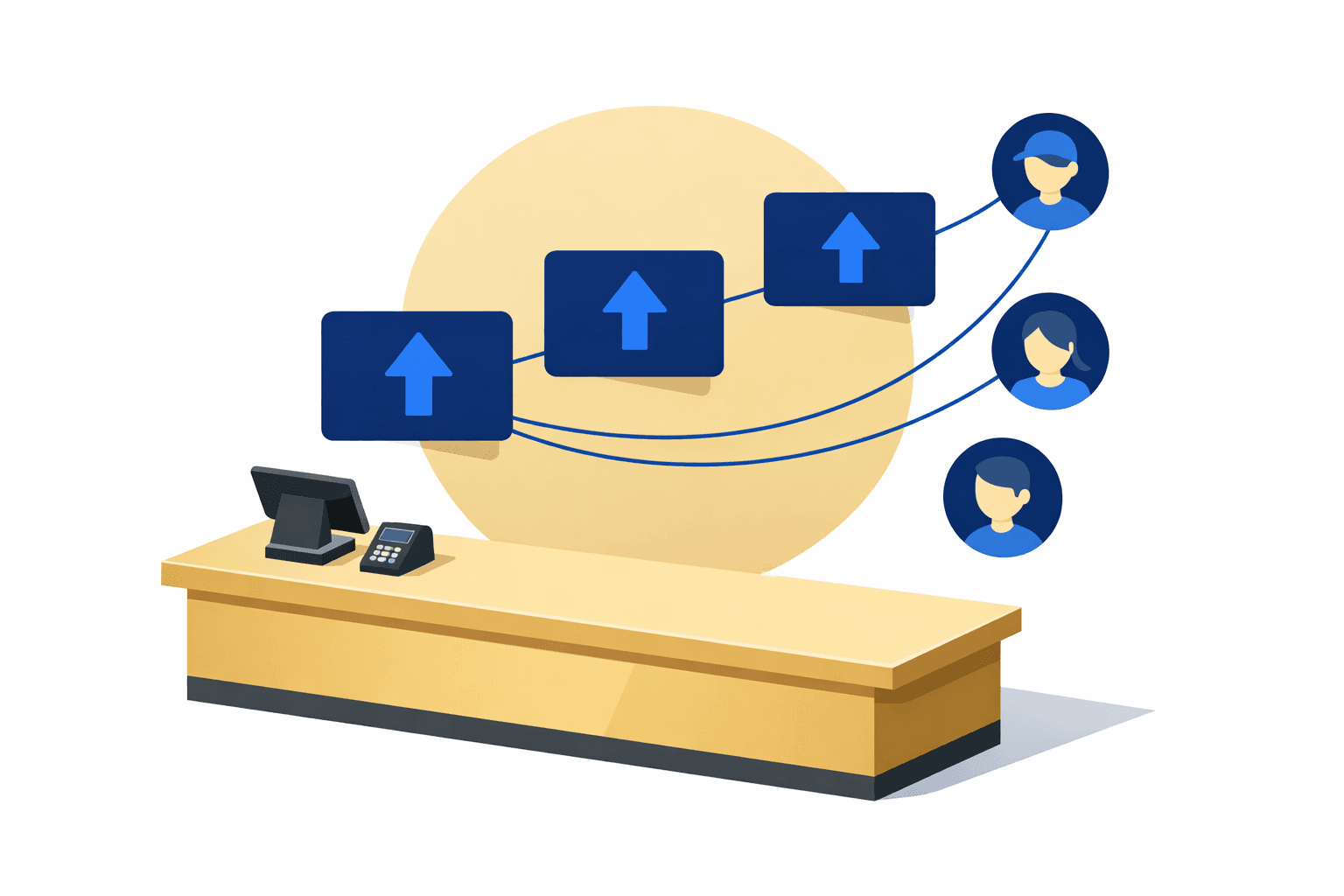
TL;DR: A med spa AI receptionist is only as reliable as the calendar it reads. When the AI and the booking calendar live in separate systems, the AI books from data that may already be wrong. That gap means double-booked injectors, rooms promised to two clients, and callers given times that are gone. The fix is an AI that reads the same calendar your front desk does, in the same system.
Med spas run on tighter scheduling constraints than most appointment businesses. An injector has a finite number of appointment slots and may work across multiple rooms. A single treatment room might serve back-to-back procedures that each require setup and turnover time. A laser suite needs to be free not just for the treatment itself, but for the consult that sometimes runs long before it. When a caller asks for the first available Botox appointment on a Thursday, the right answer depends on three moving pieces: who is working, which room is open, and whether those two windows actually overlap.
That is a lot of real-time state to get wrong. And a voice AI that pulls availability from a data feed rather than the live calendar gets it wrong regularly, in ways that only show up when a client arrives.
Why Third-Party Voice AI and Med Spa Calendars Don't Get Along
An AI receptionist that runs on a separate platform from your booking system has to get its availability data somehow. That means a sync, an API call, or both. The sync runs on a schedule that can range from every few minutes to much longer intervals. The API may be rate-limited. Either way, there is a gap between what the booking calendar shows right now and what the AI is working from.
For a hair salon booking a blowout, that gap rarely matters. For a med spa, it matters constantly. Consider what happens between syncs:
- An injector takes a walk-in
- A room gets blocked for a vendor visit
- A treatment runs long and pushes the next slot
- A staff member calls out and their appointments need redistribution
Any one of those changes the real answer to "when can I come in." If the AI is working from a snapshot that predates those changes, it offers times that are no longer real. The caller books one, and finds out at the door.
This is a category problem, not a configuration problem. No integration, however well-built, eliminates the gap between two separate systems. It only manages how wide that gap is. You can read more about what happens when that gap widens in our breakdown of what stale sync does to an AI receptionist's availability answers.
Injector Schedules Are Harder Than They Look
Injectors at a med spa often have layered schedules. A nurse practitioner might be available Tuesday, Wednesday and Friday, but only until 3 p.m. on Fridays because of a standing commitment. They may be licensed to perform certain treatments that a PA on the same team is not. That means the AI can't just find any available provider. It has to find the right one.
Add in the reality that injectors frequently carry consultation slots alongside treatment slots, and that a consult sometimes converts to same-day treatment, and the scheduling logic gets more complex than a simple open-slot search can handle. A voice AI that asks "what's your first open appointment?" is posing the wrong question if it doesn't know which provider the caller needs and what the current state of that provider's day looks like.
When the AI and the booking system are the same system, the AI has access to all of that. It doesn't have to infer from a sync. It reads the same provider-level, room-level schedule your front desk reads. When those are separate systems, the AI is guessing from incomplete data.
Rooms Are the Part That Breaks First
Room scheduling at a med spa is where availability math gets genuinely complicated. A laser room has a machine that needs to warm up. A consultation room can't be double-used for a concurrent treatment. A hydrafacial suite may need 15 minutes of turnover between clients that isn't reflected in the treatment duration itself.
Most booking systems let you model this: treatment rooms as resources, turnover buffers as blocked time, overlapping appointments only when the right room-and-provider pair is free. That logic is built into the calendar. But it's only as useful to your AI receptionist as the AI's ability to read it.
An AI that queries an external sync to find open slots is not reading that logic. It's reading a simplified output of it. Usually that means just the appointment blocks, not the buffers, not the room assignments, not the conditional availability that makes the whole thing work. So it offers a 10 a.m. laser slot that the front desk already knows is blocked because the machine needs service. Or it books a consultation into a room that's being used for a concurrent treatment.
Those aren't bugs in the AI's language model. They're the predictable result of the AI working from a floor plan it can't fully see.
What "Native" Actually Means for Booking Reliability
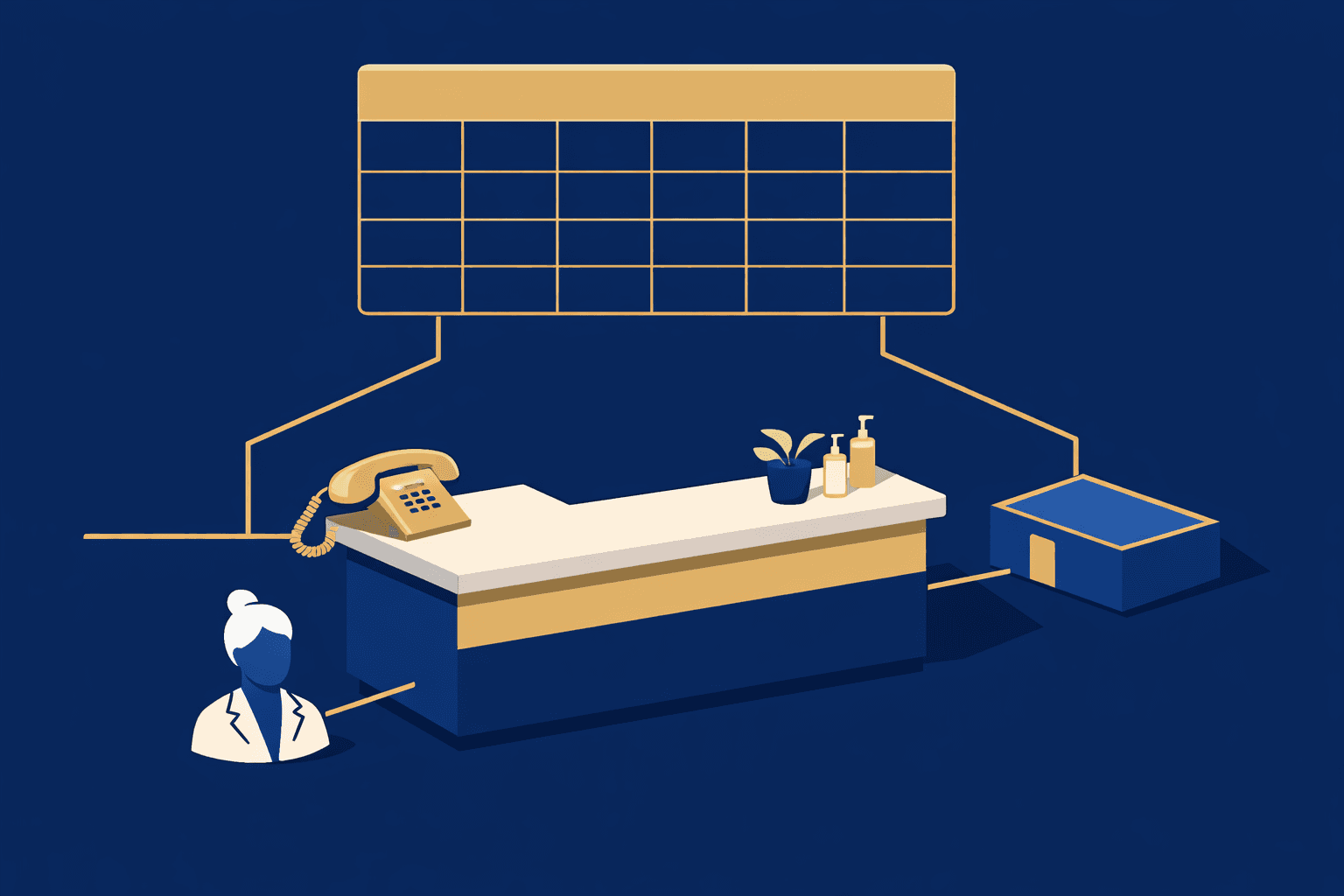
The word native gets used loosely in software marketing. In this context, it has a specific meaning: the AI and the calendar run in the same codebase, reading from the same data store. There is no sync, no API call, no translation layer between what the calendar knows and what the AI sees. When your front desk updates a provider's schedule, the AI sees that update at the same moment.
Tersavia's AI Voice Reception works this way. The AI reads Tersavia's calendar directly, using the same provider schedules, room blocks and treatment durations your front desk manages. When an injector's availability changes at 9:47 a.m., the AI isn't offering that slot at 9:52.
That matters most for the calls that come in between appointments: the caller who wants to reschedule, the one asking whether anyone can see them today, the one inquiring about a specific provider. Those calls require current information. A sync that ran eight minutes ago is not current information when a med spa calendar moves as fast as it does.
Tersavia is free forever as a booking platform. AI Voice Reception is a paid add-on, available on top of the free platform, so if you're evaluating whether voice AI makes sense for your front desk, the base software cost is not part of that calculation.
Moving Off Your Current System
If your med spa is running on Vagaro, Mindbody, or Boulevard and considering a move, the calendar question applies to your transition too. The same constraints that make third-party voice AI unreliable on a live calendar make mid-migration data messy. Tersavia imports from Vagaro and Boulevard, which gives you a starting point for client records and appointment history.
For card-on-file clients, Tersavia requests the transfer of saved cards from your current payment processor. The processor controls whether and how that transfer happens, so it's worth asking them about it before you set a cutover date. During the transition, keep your old system open until your import is verified, then cancel. That single-step cutover avoids the scenario where your new AI is reading a half-populated calendar on day one.
If you want to understand the broader mechanics of what a voice AI loses access to when a booking API changes, the post on what a booking API change does to a voice add-on covers the category mechanics in detail. And if you're evaluating the front-desk time cost of missed and mishandled calls, the real cost of a missed call going to voicemail gives you a framework for running that number against your own call volume.
FAQ
Can't a third-party AI receptionist just sync more frequently to avoid booking errors?
Frequency helps but doesn't eliminate the problem. Any sync has latency, and med spa calendars change fast. Walk-ins, provider callouts, room blocks, and treatments that run long can all alter availability in seconds. Even a sync that runs every two minutes can produce a stale snapshot. The only way to remove the gap is to remove the sync entirely by running the AI inside the same system as the calendar.
How does a med spa AI receptionist handle injector-specific availability?
That depends entirely on what data the AI can read. A native AI reads provider-level schedules, so it knows which injector is available, for which treatment, in which room. A third-party AI working from a simplified sync typically sees open blocks without the provider and room context attached, so it can offer times that look open but aren't bookable for the requested treatment.
Does Tersavia's voice AI take payment information over the phone?
No. When a deposit or payment is needed, the AI sends the client a payment link by text. It never takes card or deposit details on the call.
What happens if a med spa's injector schedule changes mid-day?
In a native system, the AI reads the updated schedule as soon as the change is made. In a third-party integration, the AI continues offering the old schedule until the next sync runs. For a busy med spa mid-afternoon, that delay is long enough to produce confirmed bookings that can't actually be honored.