What a Booking API Change Does to a Voice Add-On
When a booking platform updates its API, any voice add-on built on top of it can break. Here is what that failure looks like and why it keeps happening.
TL;DR: A voice add-on built on a booking platform's API is only as reliable as that API. When the platform pushes an update, the add-on can break quietly: it keeps answering calls, but it books against stale data, double-books slots that were already filled, or quotes availability that no longer exists. The only way to remove that dependency is to run voice inside the same system that owns the calendar.
If you have ever had a caller confirm an appointment that your front desk had no record of, the problem almost certainly started before the call ended. Not with the person who answered, not with the caller's hearing, and not with your scheduling logic. It started with how two separate software systems were sharing information at that moment, and whether that share was current.
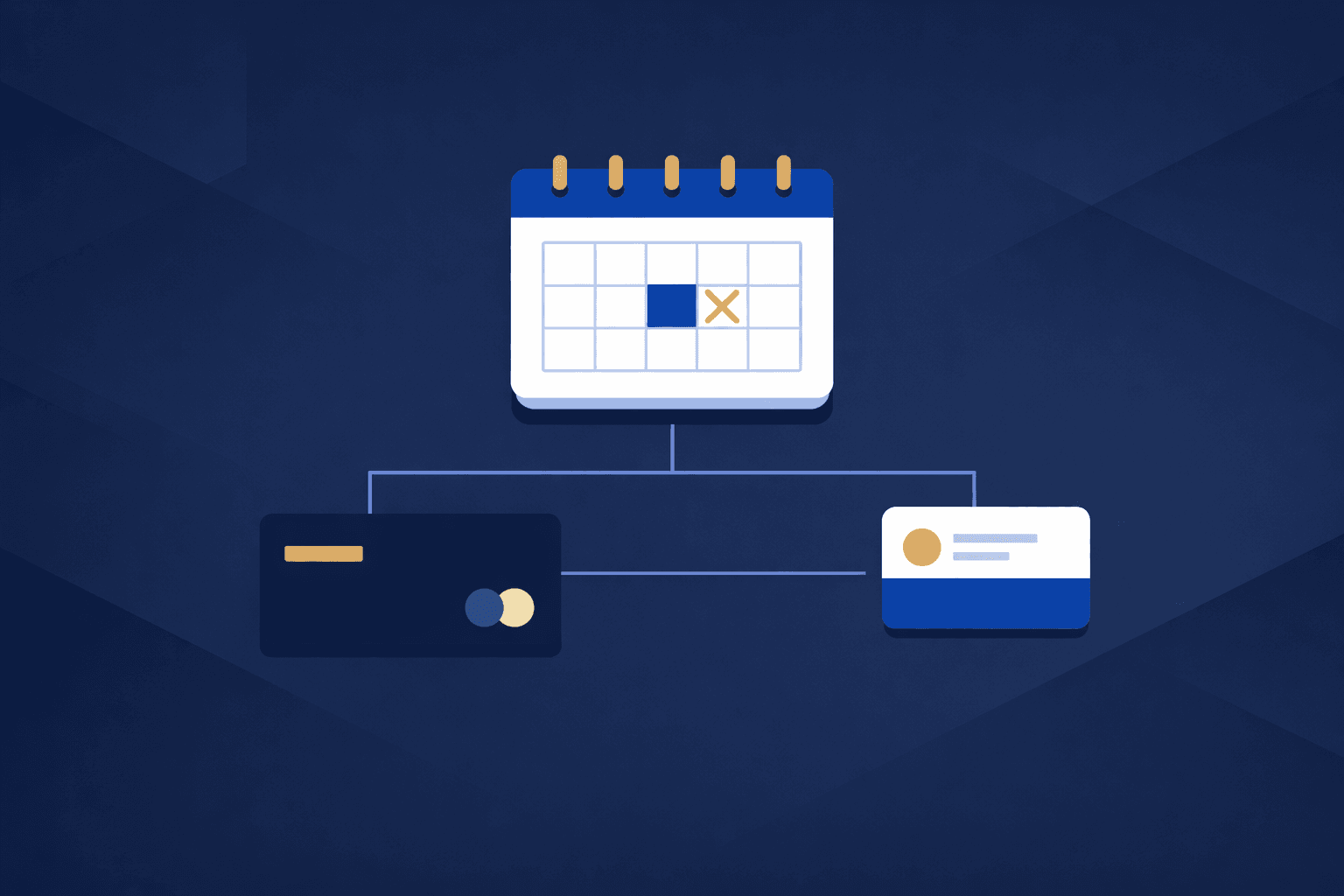
That gap is the central problem with any voice add-on that runs on a separate company's booking software. The voice layer and the calendar layer are maintained by different engineering teams, on different release schedules, with different incentives. When one side changes, the other has to catch up. Until it does, every call in between is a liability.
What an API Actually Is in This Context
An API (application programming interface) is the channel a third-party product uses to read from and write to another company's software. A voice add-on that books appointments needs to do two things at minimum: read open slots from the booking system's calendar, and write a confirmed booking back into it.
Both of those actions run through the booking platform's API. The platform defines what data it will share: the format and frequency of delivery, and the specific conditions under which that data is released. The voice add-on's developers write code that expects data to arrive in a specific structure. When that structure changes, the code that reads it breaks. It may also silently misread the incoming data.
Booking platforms update their APIs regularly. Sometimes those updates are minor field changes. Sometimes they deprecate an endpoint entirely and replace it with a new one. Either way, the voice add-on does not update itself automatically. A developer has to notice the change, understand what broke, update the integration, test it, and push a fix. That takes time, and during that window the system keeps running.
What Breaks First, and Why It Matters
The failures that follow an API change are rarely total outages. A total failure is obvious: the voice system stops answering, the front desk gets flooded, and someone calls the vendor within the hour. Those get fixed fast.
The failures that do real damage are the quiet ones. The voice add-on keeps answering calls. It pulls availability data from the last successful sync. It books appointments. But the calendar it is reading from is no longer current, because the data pipeline feeding it stopped refreshing when the API changed.
Here is what that looks like in practice:
- A caller asks for a 2 p.m. slot on Friday. The voice add-on sees that slot as open because the last successful sync ran before a cancellation posted. It confirms the booking. Your calendar already has someone in that slot.
- A staff member's hours changed on Monday. The API update changed how schedule data is structured. The voice add-on still reads the old format and offers that staff member's old slots, some of which no longer exist.
- A caller asks to reschedule. The add-on can read the existing appointment from its cached data, but the write back to the calendar fails silently because the booking endpoint changed. The caller thinks they rescheduled. The original slot stays on the books.
None of these scenarios announce themselves. They show up later, as a double-booked room, a no-show who swears they called, or a front desk that cannot find the appointment a client is standing there to keep. For a deeper look at what those missed calls and booking errors actually cost the front desk, the analysis in what missed calls cost an appointment business is worth reading.
The Sync Frequency Problem
Even when an API is stable and unchanged, sync-based voice add-ons face a structural timing problem. They do not read the calendar in real time. They read a copy of it, updated at whatever interval the integration allows.
For a busy spa or salon, five minutes is a long time. Two clients can call in that window. A front desk agent can grab a slot manually. A cancellation can come in through the online booking page. All of that happens on the live calendar, while the voice add-on is still working from the last snapshot.
An API change does not create this problem. It exposes and amplifies a problem that was already there. The copy the voice add-on reads is always trailing the live calendar by some margin. An API change can stop that copy from updating at all, which turns a manageable lag into an indefinite freeze.
Why the Fix Takes as Long as It Does
When a booking platform updates its API, third-party developers usually find out one of two ways: their monitoring catches an error rate spike, or a customer reports something wrong. Neither of those is immediate.
After detection, the fix involves reading the platform's updated API documentation (if it has been published), identifying exactly what changed, updating the integration code, running it against test data, and deploying the update. Platforms that release API changes with short deprecation windows or without advance notice compress that entire process.
For any voice add-on company, the booking platform is a dependency they do not control. They cannot pause the platform's release cycle. They cannot delay the update. They can only respond to it, and their response time determines how long your booking flow runs on stale data.
That dependency is why voice AI that runs inside the booking system's own calendar is a structurally different category. There is no sync or API translation layer, and no external developer is catching up to a change someone else made. The calendar the voice layer reads is the same calendar the business runs on.
What to Ask Before You Add a Voice Layer
If you are evaluating a voice add-on for your scheduling stack, the API question should be part of the conversation. These are practical things to ask or look for:
- How does the voice system read your current availability? Is it a live read or a cached sync?
- How quickly has the vendor patched the integration after past booking platform API updates? Ask for a specific example.
- What happens to active calls during an API outage or sync failure? Does the system fail open (keeps booking) or fail closed (stops booking)?
- Who is responsible for noticing the break: the vendor's engineering team, or you?
The answers will tell you how much calendar risk you are absorbing by adding that layer. For many owners who switched off a paid booking platform, the discovery that software add-on pricing stacks in ways that are hard to forecast is what started the conversation. A voice add-on with its own failure modes is one more layer of that stack.
If you are currently on Vagaro or Boulevard and want to move, Tersavia imports from both. Standard practice during any cutover is to keep your old system accessible until you have verified the import, then cancel. That gives you a clean record of your client history without depending on two live systems at once.
The decision that matters most is where the voice layer lives relative to your calendar. A voice add-on that runs on another company's API has a fragility point built into its architecture. That fragility does not disappear when the API is stable. It just waits for the next update. A look at how add-on pricing stacks against you over time puts the cost of that fragility alongside the cost of the add-on itself.
Frequently Asked Questions
What is a booking API change, and why does it affect a voice add-on?
A booking platform's API is the channel a voice add-on uses to read availability and write confirmed appointments into the calendar. When the platform updates its API, the structure of that data can change. If the voice add-on's code has not been updated to match, it misreads the data or cannot write back at all, producing double bookings or unrecorded appointments.
Can a voice add-on break without showing any error message?
Yes, and that is the more common failure. The voice system keeps answering calls and confirming appointments. But if the sync feeding it stopped refreshing after an API change, it is booking against a stale copy of the calendar. The error shows up later as a double booking or a missing appointment, not as an obvious system failure.
How long can a voice add-on run on stale calendar data after an API change?
There is no fixed answer. It depends on when the vendor detects the break, how complex the fix is, and how quickly they deploy it. Detection alone can take hours if no monitoring is in place. The fix and deployment add more time on top of that.
Is there a way to avoid this problem without giving up voice booking?
The structural fix is to use a voice system that reads the same live calendar it books into, rather than a synced copy maintained through a third-party API. When the voice layer and the calendar layer are the same system, there is no external API to break and no sync lag to manage.