Planning Your Schedule Around Laser Device Downtime
Laser device downtime doesn't have to wreck your schedule. Here's how clinics plan maintenance windows, protect revenue, and rebook clients fast.
TL;DR: Laser device downtime — whether planned maintenance or an unexpected breakdown — is one of the most disruptive scheduling events a clinic faces. The clinics that handle it well treat it as a forecasting problem, not a crisis. Build a maintenance calendar, create a rebook protocol, and cover your phones so no client falls through the gap.
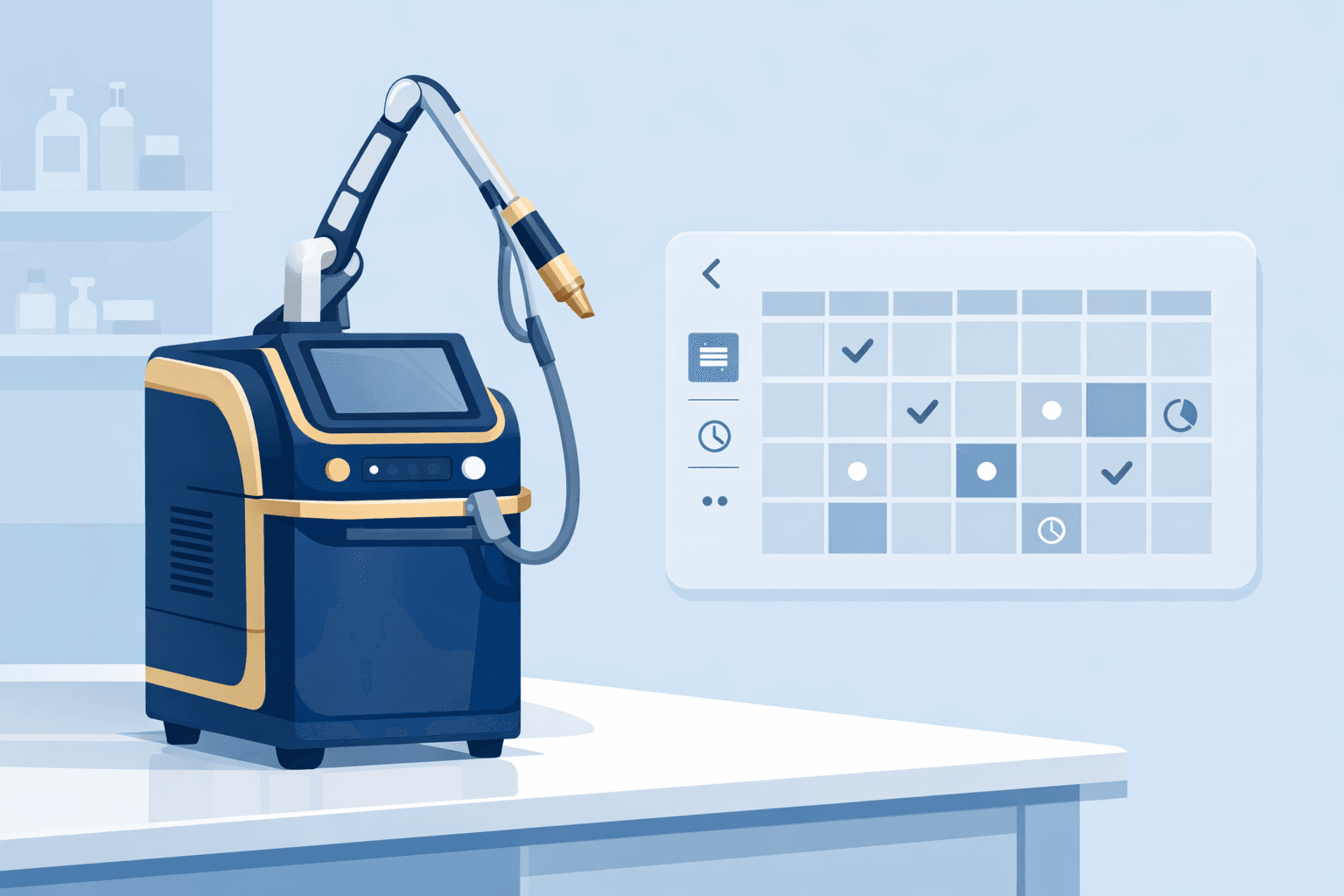
If you run a laser clinic, you already know the device is the business. When it's down, every appointment tied to that machine has to move, and the clock is ticking on client goodwill. A booked-out treatment schedule becomes a rebooking queue almost overnight.
The difference between a clinic that recovers in a day and one that loses clients over it usually isn't the machine — it's the plan that was or wasn't in place before the breakdown happened.
Know Your Device's Maintenance Rhythm Before It Forces Your Hand
Every major laser platform has a service cadence. IPL systems, Nd:YAG devices, fractional lasers, and diode hair-removal machines all require periodic preventive maintenance — filter changes, calibration, handpiece servicing, and in some cases a manufacturer visit.
Most clinics receive this information in the device manual and then never look at it again. That's the setup for a crisis.
Steps worth taking now:
- Pull the maintenance schedule from your device manual or manufacturer portal. Most machines specify service intervals in hours of use or calendar months — whichever comes first.
- Log your actual usage. If your Vagaro or Mindbody schedule has laser appointments on it, you can estimate hours without a separate tracking sheet.
- Block maintenance windows on your booking calendar at least four to six weeks out. A blocked window you control is far less painful than an emergency close-down.
- Keep your service provider's contact on file and schedule annual preventive visits proactively. Waiting until a fault code appears means you're competing with every other clinic that also waited.
Proactive blocking also gives you a window to batch other clinic tasks — staff training, room refreshes, photography for the service menu — so the downtime earns something instead of just costing you.
Build a Rebook Protocol Before You Need It
The moment a laser goes offline, every affected client becomes a flight risk. The ones who don't hear from you quickly will assume the worst, look elsewhere, or just quietly cancel their upcoming appointments.
A solid rebook protocol has four pieces:
- A pulled report of every upcoming appointment on that device, sorted by date.
- A templated outreach message — SMS and email — that acknowledges the disruption, apologizes briefly, and offers two or three specific rebook options.
- A clear priority order for rebooks: clients mid-series first, since a long gap between sessions can compromise results. Clients who are just starting a series are more flexible.
- A dedicated block of time on the calendar for the rebook queue, so you're not trying to squeeze displaced appointments into already-packed days.
That third point matters more than most owners realize. If you're running a hair removal series and a client misses a session by six or eight weeks, the spacing math breaks down and results suffer. That becomes your problem, not theirs. Prioritizing mid-series clients protects their outcomes and your liability. The laser session spacing guide covers the interval math worth keeping in mind when you're slotting rebooks.
Protect Revenue During Extended Outages
A one-day maintenance visit is manageable. A parts delay, a manufacturer backlog, or a failed handpiece that takes two weeks to replace is a different problem — one that can seriously dent monthly revenue if you're not ready for it.
A few moves that limit the damage:
- Offer an in-store credit for the displaced appointment if the rebook lands more than two weeks out. It keeps the revenue on the books and keeps clients loyal.
- If your clinic runs multiple devices, shift lower-energy treatments to the working machine and protect its capacity for clients who can't be served any other way.
- For extended outages, consider whether a short-term equipment rental from your distributor is financially worth it. For high-volume laser clinics, the math often favors paying for a loaner.
- Do not silently cancel appointments. Clients who find out about a cancellation through a no-show notification — instead of a proactive call or text — are far more likely to leave a negative review.
The Tersavia laser clinic page has additional context on how scheduling and client communication work together for device-heavy clinics.
Keep Your Phones Covered When the Volume Spikes
Here's something that almost always gets missed: when a laser goes down, your front desk phone volume goes up. Clients call to ask what happened, to reschedule, to check whether their series is still on track. That call surge lands at the exact moment your team is busiest managing the internal chaos.
If your front desk is already stretched, those calls go to voicemail. Voicemail is where rebook opportunities go to die. The cost of missed calls at appointment businesses isn't abstract — every unreturned call during an outage is a client making a decision without your input.
A voice AI receptionist changes that math. It answers every call regardless of what's happening on the floor, handles the common questions ("Are you still booking laser appointments?" "What happened to my appointment?"), and books rescheduled slots directly into your calendar. The team focuses on the clients already in the building.
This isn't just useful during a crisis. Clinics that handle an outage gracefully on the phones end up with stronger client retention than before the breakdown — because the experience of being communicated with clearly turns a frustration into evidence that the clinic is well-run.
What to Track After Every Downtime Event
Each outage is data. Clinics that track it build better plans. After the device is back online, spend fifteen minutes documenting:
- How many appointments were displaced and how many were successfully rebooked
- How long the outage lasted vs. how long you initially projected
- Which communication method (SMS vs. email vs. phone) got the fastest rebook response
- Whether any clients churned — and if so, whether they said why
Over time, this gives you a realistic picture of your actual recovery rate and where the friction lives. Most clinics find that rebook rates are highest when they call rather than text, but the volume of displaced appointments often makes calling every client impractical. Knowing your numbers helps you decide where to invest the manual effort.
FAQ
How far in advance should a laser clinic schedule preventive maintenance?
Four to six weeks is the practical minimum. It gives you enough runway to notify affected clients, rebook mid-series clients before their treatment intervals are disrupted, and handle any parts delays without emergency pricing from your service provider.
How do you prioritize rebooks when a laser goes offline unexpectedly?
Start with clients who are mid-series. A large gap between sessions can affect outcomes and extends the overall treatment timeline. New clients who haven't started yet are more flexible and easier to shift. Within each group, prioritize by how close the next scheduled appointment was to the outage date.
What should you say to clients when a laser device breaks down?
Be direct and specific. Tell them what happened, when you expect the device back online, and offer concrete rebook options rather than asking them to call you. Clients tolerate equipment issues far better than they tolerate vague or delayed communication. A proactive outreach call or text within a few hours of discovering the problem is the standard to aim for.
Does device downtime affect a client's laser treatment series results?
It can. Most laser series are spaced to align with hair or skin cell cycles, so a session delay of a few weeks typically doesn't cause lasting problems — but longer gaps can reduce the cumulative effect of the series. Communicating this honestly and rebooking promptly protects both the client's results and your relationship with them.