How to Improve Your Salon Retail Attachment Rate
Your salon retail attachment rate is money left on the table. Here's how to lift it at the chair without making your stylists feel like salespeople.
TL;DR: Most salons attach retail to fewer than 20% of appointments, and the gap isn't about product selection. It's about timing, language, and a checkout process that buries the moment stylists should be talking about what they used. Fix the workflow and the number moves.
Retail is the highest-margin revenue line in a salon. No additional labor hours, no booking slot, no room overhead. The product is already in the stylist's hand during the service. And yet most salons convert fewer than one in five clients to a take-home purchase.
That's not a product problem. Most salons carry good product. It's a process problem, and it starts at the chair.
What the Attachment Rate Number Actually Measures
Your retail attachment rate is simple: divide the number of appointments where at least one retail item was sold by total appointments completed. If you did 200 appointments this month and sold retail during 34 of them, your attachment rate is 17%.
Some operators track retail revenue as a percentage of service revenue instead. That's useful for benchmarking against prior periods, but it conflates ticket size with frequency. A single client buying a $90 treatment set inflates the revenue percentage without changing the attachment rate at all. Track both numbers, but don't let the revenue figure mask a low conversion count.
Industry benchmarks vary by source, but a healthy attachment rate for a full-service salon sits somewhere between 25% and 40%. If you're below 20%, the opportunity is significant. If you're above 35%, you're likely doing something deliberate at the chair and at checkout.
Why Stylists Underprice Their Own Recommendations
Most stylists are not salespeople by identity. When asked directly, many say they don't want to seem pushy. That reluctance is understandable, and it's also the wrong frame.
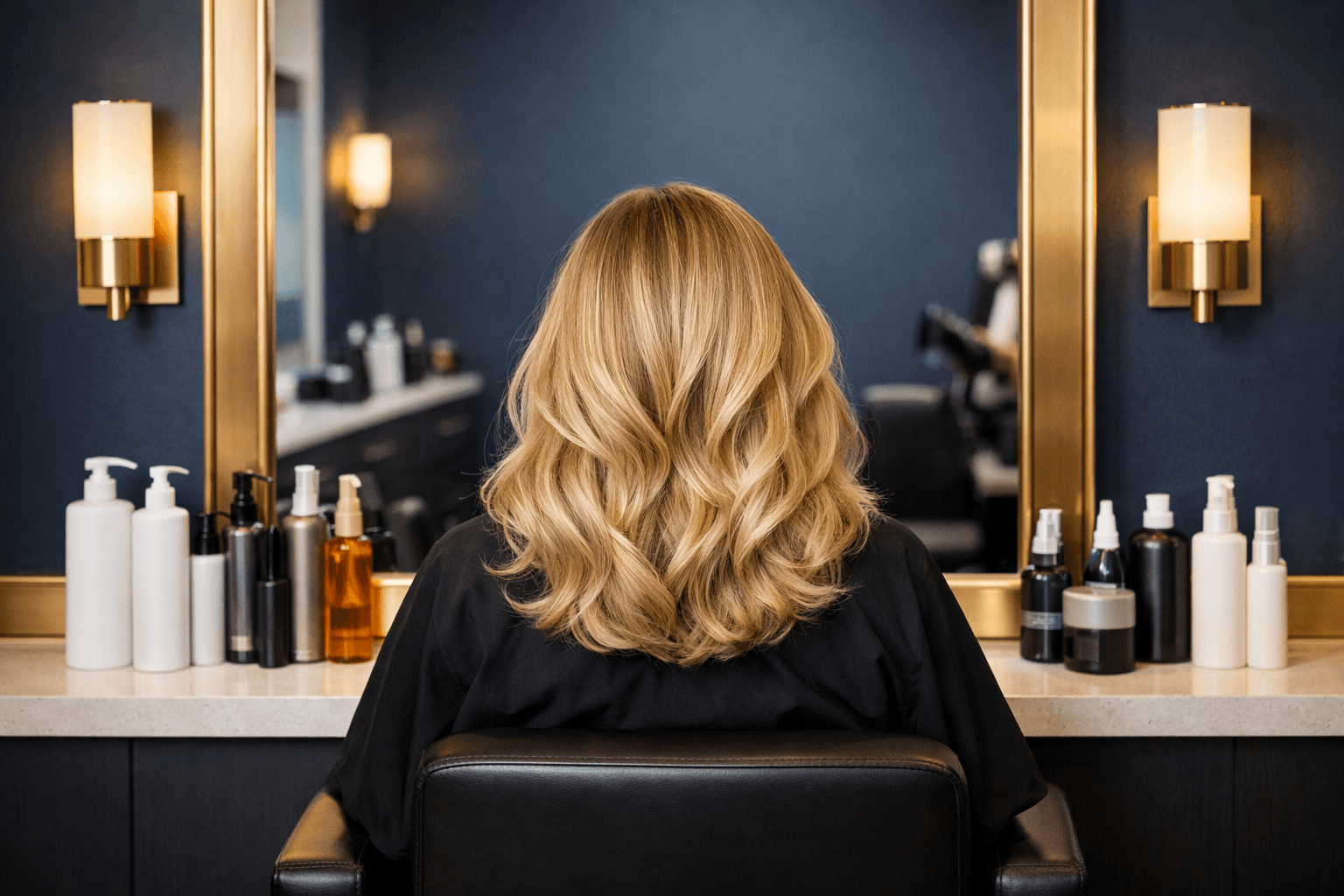
A client just spent 90 minutes in your chair. The stylist blow-dried their hair, used three specific products to get the finish, and the client watched every step. That's not a sales pitch setup. That's a demonstration. The recommendation is part of the service.
The language shift that works is simple: move from "would you like to buy" to "this is what I used and why it matters for your hair." Specifically:
- "I used the volumizing mousse on your roots before I diffused. It's what's giving you that lift."
- "Your ends were pretty dry today, so I finished with a sealing oil. That's the one keeping things from frizzing on your way out."
- "This shampoo is sulfate-free, which matters for your color. I'd switch out whatever you're using at home."
Those are not sales lines. They're explanations of what just happened. Clients who understand what was used, and why, buy at a much higher rate than clients who receive a generic recommendation at the register.
The Timing Problem at Checkout
Even when a stylist makes a great chair-side recommendation, checkout often kills the close. The client walks to the front desk, gets handed a total, and is already thinking about their next errand. The retail conversation, if it happens at all, becomes an afterthought.
The recommendation needs to happen before the client leaves the chair. Not at the register, not while the stylist is walking them to the front. At the chair, during the final styling pass, while the product is still visible and the experience is live.
A practical sequence:
- During the service, name the product as you use it. Don't wait until the end.
- In the final two minutes of styling, do a quick recap: "I used X for your roots and Y on the ends. Both are ones I'd recommend you have at home."
- Walk the client to the retail display before the register. Point to the products. Hand them the bottle if the format allows.
- Let checkout confirm the purchase, not initiate the conversation.
This sequence moves the retail moment to where it belongs: inside the service, not after it. For a deeper look at what happens when the checkout moment gets compressed by phone volume or a full waiting room, front desk phone volume and what it costs your operations is worth reading.
What Your POS Data Is Telling You
Most salon software tracks retail sales. Very few operators run the report that matters: attachment rate by stylist.
If you pull that report and find wide variance, you've found your training opportunity. A stylist with a 35% attachment rate is doing something differently than the one at 8%. Sit in on a service. Listen to how they talk during the styling pass. The difference is almost never product knowledge. It's almost always language and timing.
Common patterns in low-attachment stylists:
- They recommend at checkout instead of at the chair
- They ask "do you need anything today?" instead of naming a specific product
- They assume the client can't afford it or won't be interested
- They skip the recommendation entirely when the floor is busy
If you're running on a platform like Vagaro or Mindbody, the retail sales data is in your system. Pull it by provider, not just by location. That per-stylist view is where the coaching conversation starts.
For salons thinking through how stylist-level data connects to overall service structure, how salon stylist level pricing really works lays out the operational logic that also applies here.
Building a Retail Culture Without Pressure
The salons that sustain high attachment rates don't rely on stylist motivation alone. They build the expectation into the workflow itself.
A few things that work:
- Keep retail products in the styling station, not just on a display wall. If the shampoo is six feet away and the client can't see it, it won't come up naturally.
- Add a retail field to your service notes. When a stylist records what products they used, it creates a natural prompt to mention them and a reference for next visit.
- Review attachment rate in team meetings, not as a performance review item, but as a practice question: "What did you recommend this week and how did the client respond?"
- Set a target by service type, not just globally. A color service has a different retail opportunity than a blowout. Conditioning treatments, bond builders, toning shampoos. The relevant product list changes by service.
For salons managing this across multiple service types, rebooking cadence by service type covers how service-specific thinking applies to other parts of the client relationship too.
If you're evaluating how your software supports retail tracking and client records, Tersavia's hair salon page outlines what the platform covers for appointment-based salons. Tersavia is free when you process payments through the platform, which changes the math on what you're spending to run client records and checkout in one place.
FAQ
What is a good salon retail attachment rate?
A healthy attachment rate for a full-service salon is generally between 25% and 40%. Below 20% suggests the retail conversation isn't happening consistently at the chair. Above 35% typically reflects deliberate process, not just motivated stylists.
Why do stylists avoid making retail recommendations?
Most stylists don't want to seem pushy. The fix is reframing the recommendation as an explanation of what was used during the service, not a sales pitch. Clients who understand what a product did for their hair buy at a much higher rate.
When should the retail recommendation happen in a salon appointment?
During the final styling pass, not at checkout. Naming the product while it's in use, then recapping before walking the client to the register, keeps the conversation inside the service experience where it lands better.
How do I find which stylists have the highest retail attachment rates?
Pull a retail sales report by provider from your salon software. Vagaro and Mindbody both include this in their reporting. The gap between your highest and lowest performers usually shows you exactly where the coaching conversation needs to go.