Reschedules and Cancellations an AI Hears About Last
When an AI receptionist runs on another company's booking system, reschedules and cancellations reach it last. Here's what that costs your front desk.
TL;DR: An AI receptionist that runs on a separate company's booking system is only as current as the last sync or API call between the two. Reschedules and cancellations that land in the booking system between those syncs exist in a blind spot the AI keeps offering as open. Tersavia's voice AI runs inside its own calendar, so the slot state the AI reads is the same state the calendar holds.
A client calls in, ready to move her appointment. The AI receptionist picks up, pulls available times, and offers her a slot at 2 p.m. Tuesday. She takes it. Confirmation goes out. Later, your front desk discovers two clients booked into the same room at the same time. Another client had already shifted into that 2 p.m. window, and the AI did not know yet.
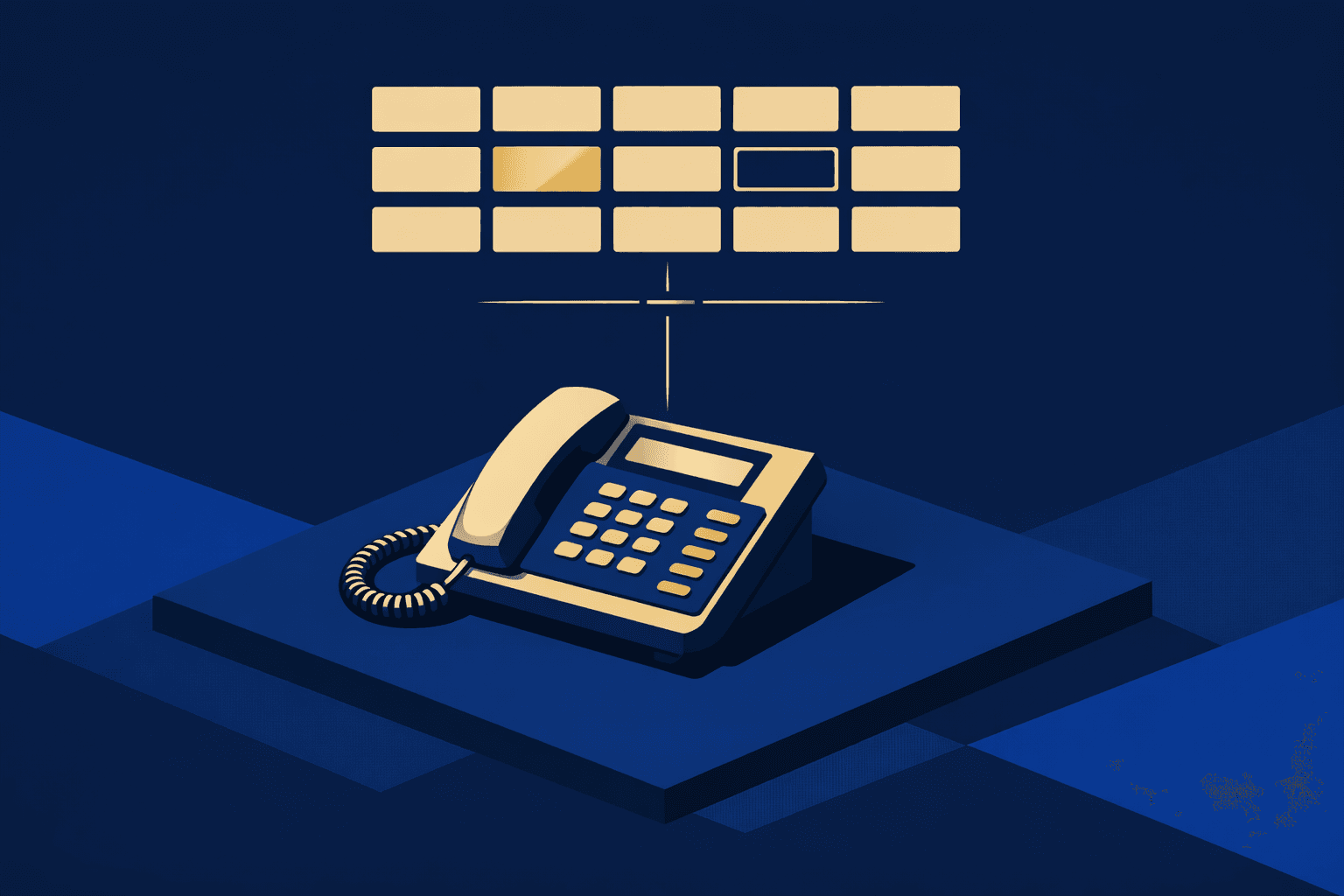
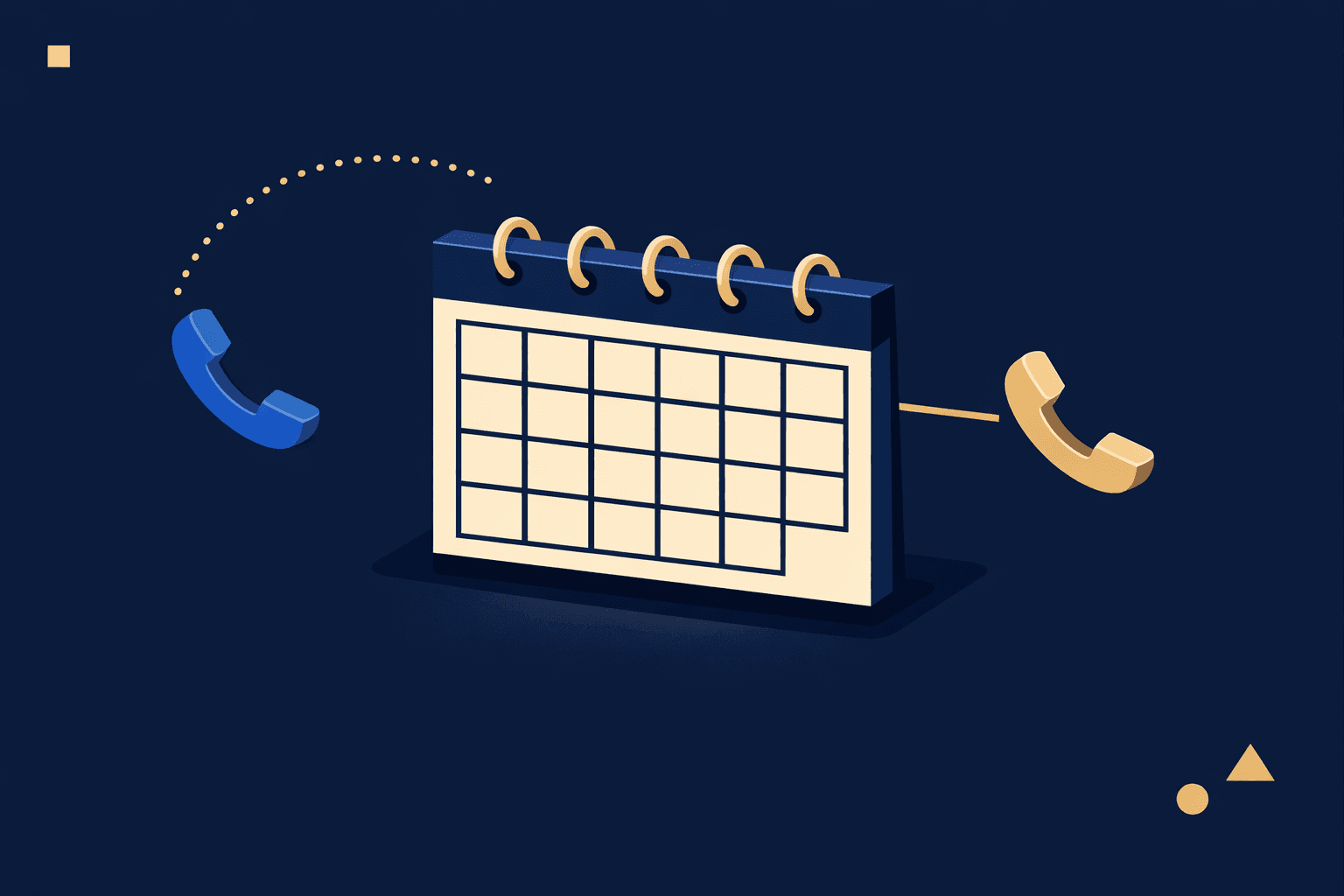
This is not a failure of AI. It is a failure of distance. The moment you place an AI receptionist in one system and the calendar in another, the two drift apart, and every reschedule or cancellation that lands between sync cycles is a piece of information the AI does not have.
Why the Last Sync Is Already Wrong
Booking platforms expose their data through APIs: the AI receptionist calls the API, gets a snapshot of availability, and uses that snapshot to answer the caller. The snapshot is accurate at the moment it was taken. After that, it ages.
A client cancels online three minutes after the AI pulls its last snapshot. The AI's copy of the calendar still shows that slot as occupied. It will offer the caller the surrounding times but not that one, even though the slot just opened. In a high-volume practice, those three minutes can be the difference between filling the gap and losing it.
The same problem runs in the other direction. A client calls to reschedule, reaches a staff member rather than the AI, and staff move the appointment manually. The API does not push that change to the AI. The AI must request it on the next cycle, and until it does, the AI is still guarding the original slot as taken and not offering the newly opened window to anyone.
How often the AI calls the API varies by implementation, but any gap in that cycle is a window of inaccuracy. On a busy Tuesday morning when four clients reschedule before lunch, the gap compounds across every one of those changes. The AI is working from a version of the calendar that reflects none of them. You covered the mechanics of what happens when an API change breaks a voice add-on entirely in what a booking API change does to a voice add-on, but the everyday sync delay is a quieter version of the same structural problem.
The Cancellation Blind Spot Is Worse Than the Rebooking Problem
A reschedule creates two problems: a ghost slot the AI keeps protecting, and a new gap it may or may not surface. A cancellation creates one very specific problem: a desirable slot that nobody can fill because the AI does not know it is open.
Last-minute cancellations are high value. Clients on a waitlist want those windows. The AI should be the fastest path to filling them, but only if the AI knows about them first. When the cancellation lives in the booking platform and the AI lives elsewhere, the notification chain runs booking platform, then API, then AI. The client on the waitlist who calls in during that lag gets told nothing is available.
The cost of that lag is not just one unfilled appointment. It is the gap between what your cancellation policy recovers and what a filled slot would have earned. For the math on how quickly empty slots add up, the breakdown in what a no-show appointment actually costs is worth reading before you estimate the damage.
What a Native Calendar Changes
The fix is not a faster sync. Faster syncs reduce the window of inaccuracy, but they do not close it. Any system where the AI and the calendar are operated by different companies will have moments where the two disagree, because network calls take time and APIs have rate limits.
The only architecture that eliminates the gap is one where the AI reads directly from the same data the calendar writes to, inside the same system. When a client cancels through the booking portal, the slot opens in the database. When the AI picks up the next call, it reads from that same database. There is no intermediate call, no snapshot to expire, no sync window to miss.
Tersavia's AI Reception works this way. The voice layer is not a third-party add-on communicating with the booking system over an API. The AI and the calendar are the same product, and the AI reads live slot state at the moment of the call.
The practical difference shows up in the scenarios above. A client cancels, and the slot is immediately visible as open. A staff member reschedules someone manually, and the freed window is available to the next caller before anyone has to think about it. The AI is not working from a snapshot. It is working from the current state.
Where Bolted-On AI Breaks Down in Practice
Here is where the sync problem surfaces in a real workday:
- A client calls to cancel same-day. The cancellation registers in the booking system. The AI's next sync has not run. Another caller asks about same-day availability and is told nothing is open.
- A staff member calls out. The manager manually removes that stylist's block from the schedule. The AI keeps offering the now-removed appointments to callers until the next sync picks up the deletion.
- Two clients are on a waitlist for the same slot. One calls in and books through the AI using a snapshot that predates a rescheduled appointment. The other books through the portal directly. Both receive confirmations.
- A client reschedules for later in the week. The original slot is now open. The AI does not surface it as open on the next call, because its snapshot was taken before the reschedule. The gap goes unfilled.
None of these require a failure on the AI's part. They require only that the AI and the booking system are different systems talking to each other on a delay. That delay is structural.
The front desk cost of a missed or mis-answered call is already well documented. Add a layer where the AI answers but gives wrong information, and the cost is the same: a client who does not get booked correctly, plus the staff time to untangle the double-booking or the complaint afterward.
FAQ
Why does an AI receptionist not just refresh its availability constantly?
API calls are rate-limited by the booking platform, and they carry a small processing cost every time they run. Even a system that calls the API every thirty seconds has a thirty-second window of potential inaccuracy. In a busy practice, thirty seconds is enough time for a cancellation or reschedule to create a conflict.
Can a webhook solve the sync problem for a bolted-on AI?
Webhooks push a notification to the AI when a change happens in the booking platform, rather than waiting for the AI to ask. That closes the gap significantly. But it depends on the booking platform supporting the right webhook events, the AI system processing them without delay, and the connection staying healthy. Each of those is a dependency that can fail. A native architecture has none of those dependencies.
What happens to the double-bookings that come from stale sync?
Usually staff catch them during the day and have to call one client to reschedule. That call takes time, it creates friction for the client, and it undermines confidence in the booking process. The cost is staff time plus a client relationship that is slightly harder to keep.
Does Tersavia's voice AI cost extra on top of the booking platform fee?
Tersavia's booking platform is free forever. AI Reception is a paid add-on priced separately. The platform fee is not the AI fee. They are billed independently.