Prepaid Service Packages: Protect Revenue & Fill Seats
Learn how prepaid service packages reduce no-shows, lock in revenue, and keep your appointment book full — with setup tips for Vagaro, Boulevard & more.
TL;DR: Prepaid service packages are one of the most underused tools in appointment-based businesses. They reduce no-shows, smooth out slow weeks, and lock in revenue before the client ever sits in your chair. This guide walks you through exactly how to structure, price, and operationalize them — including how your booking system handles redemption.
You've probably thought about packages before. Maybe you even tried one years ago, it got messy, and you quietly dropped it. You're not alone. Most salon and spa owners who abandon packages don't have a concept problem — they have an execution problem.
When a client prepays for five facials or a bundle of blowouts, something fundamental shifts. They've already committed money. They're not weighing whether to show up on a gray Tuesday morning — that decision was made at checkout weeks ago. That psychological shift is worth more than any reminder text you could send.
But packages only work if they're structured correctly, priced strategically, and tracked in your booking system so redemptions don't become a bookkeeping nightmare. This post covers all three.
Why Prepaid Packages Cut No-Shows More Than Deposits Do
Deposits reduce no-shows because clients have skin in the game. Packages take that logic further — the entire service is already paid for.
Here's the behavioral economics at work: when someone pays a $50 deposit on a $150 service, they still feel like they're spending $100 the day of the appointment. It's a partial commitment. When someone buys a five-service package upfront, every individual appointment feels free to them in the moment. They've mentally processed the spend. Skipping an appointment doesn't feel like saving money anymore — it feels like throwing money away.
The data backs this up. Industry benchmarks across salon and spa operators consistently show package holders no-show at roughly half the rate of clients booking individual sessions. Some operators report rates as low as 4-6% for package clients compared to 15-20% for one-off bookings.
That's not just about revenue protection — it's about staffing. When you know your 10am Tuesday slot is filled by someone who prepaid for a package, you can schedule your team with confidence instead of padding the book to account for no-shows.
How to Structure a Package That Actually Sells
Not all packages sell equally well. Here's what separates the ones that move from the ones that collect dust on your booking page.
1. Match the Package to a Repeatable Service
Packages work best for services clients return to on a predictable cadence. Think:
- Facials (monthly)
- Lash fills (every 2-3 weeks)
- Massage therapy (bi-weekly or monthly)
- Haircuts (every 4-6 weeks)
- Waxing (every 4-6 weeks)
- Chiropractic or acupuncture visits
One-time or highly customized services — color corrections, specialty treatments, first-time consultations — are poor package candidates because the client's needs change too much session to session.
2. Use a 3x or 5x Structure
Three-service and five-service packages outperform ten-service bundles in most markets. The commitment feels manageable, and the discount is meaningful without gutting your margins.
A simple pricing framework:
- 3-pack: 5-8% discount off individual pricing
- 5-pack: 10-12% discount
- 10-pack: 15% discount (reserve for high-frequency services only)
Avoid discounting beyond 15-20% unless you're using the package as a loss-leader for a specific acquisition goal. Your goal is revenue certainty and retention — not a race to the bottom on price.
3. Set a Clear Expiration
This is where many operators get uncomfortable, but it's non-negotiable for your business to work. Packages need expiration dates.
A common structure:
- 3-pack: valid for 6 months
- 5-pack: valid for 9-12 months
- 10-pack: valid for 12-18 months
Expiration windows serve two purposes. First, they prevent clients from sitting on packages for two years and redeeming them after a price increase you've already implemented. Second, they create urgency — clients with expiring packages rebook faster than almost any other segment.
Be transparent about expiration in your terms at purchase. Most clients won't object when it's framed correctly: "Your package is valid for 12 months, which gives you plenty of time to use all five sessions."
4. Attach Packages to Specific Services, Not General Credits
Service-specific packages ("5 Swedish Massages") outperform dollar-value gift certificates or general credit bundles for one key reason: they encourage rebooking the same service, which builds a habit loop. General credits give clients too much flexibility and dilute your control over scheduling and staffing.
Setting Up Packages in Your Booking System
Every major platform handles packages differently, and getting the setup right upfront prevents redemption headaches later.
Vagaro
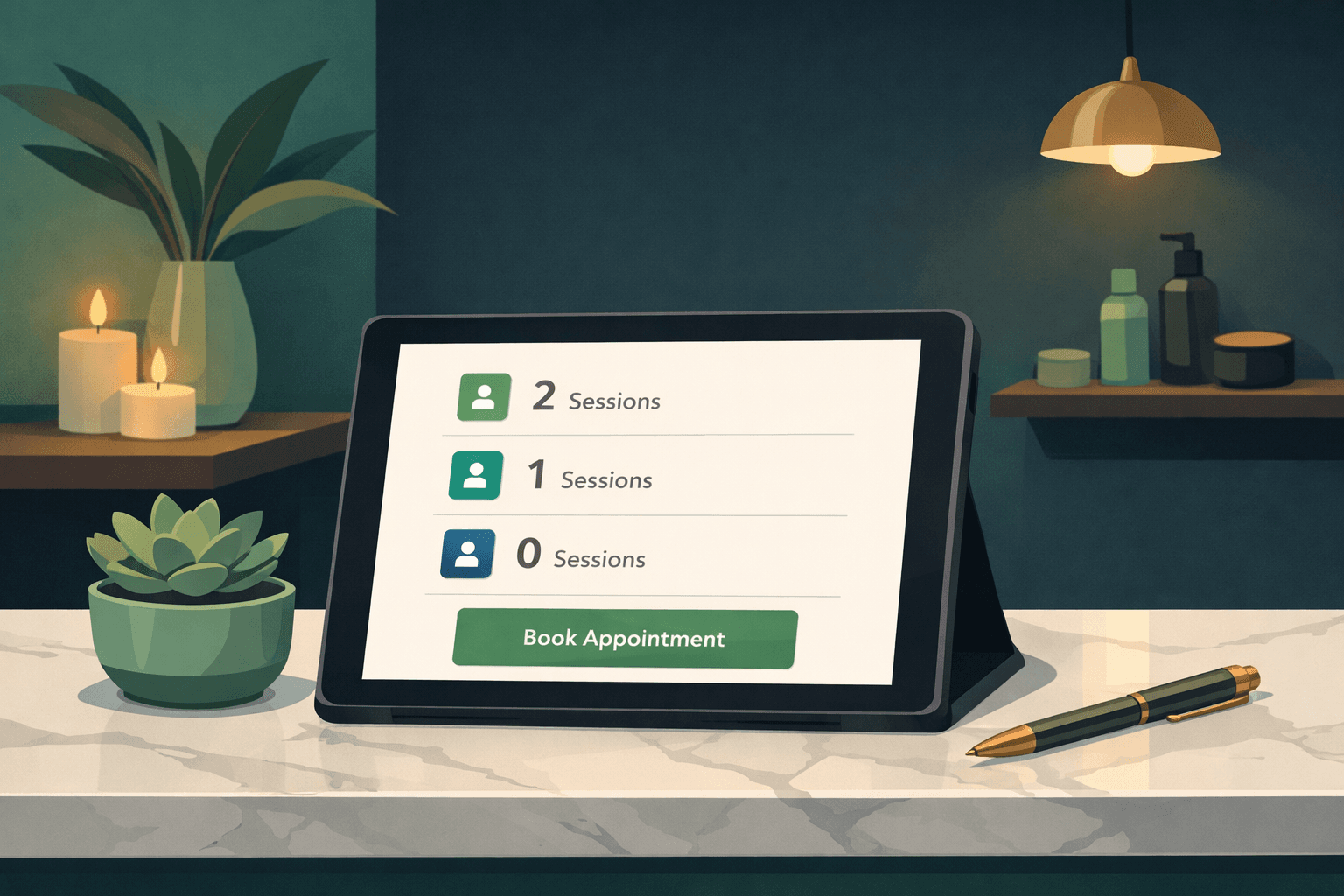
Vagaro has solid package functionality built in. You can create service packages under the "Packages" section, assign them to specific services or service categories, and set expiration dates. When a client redeems a session, it draws down automatically at checkout. The client's package balance is visible in their profile, so your front desk (or your AI receptionist) can see exactly how many sessions remain without asking.
Boulevard
Boulevard handles packages through its "Series" feature. You build a series tied to a specific service, set the session count and expiration, and Boulevard tracks redemptions against the client's profile. One thing to watch: Boulevard's series are service-specific by default, so if you want flexibility (e.g., client can use the package toward either a 60-min or 90-min massage), you'll need to configure service variants carefully upfront.
Mindbody
Mindbody calls these "Pricing Options" — specifically the "Package" or "Series" type under Pricing Options. Mindbody gives you granular control over which services a package applies to, expiration behavior, and whether packages are shareable (useful for couples or family accounts). The setup has more steps than Vagaro or Boulevard, but the flexibility is there if you need it.
Mangomint
Mangomint's package feature is clean and straightforward. You'll find it under the "Products" section — create a package, link it to one or more services, and set the visit count and validity window. Mangomint's client-facing interface is particularly good at surfacing remaining package sessions during online booking, which reduces friction at checkout.
Jane App
Jane App handles packages through its "Gift Cards & Packages" section. Jane is popular with wellness and health clinics (physiotherapy, acupuncture, mental health) and handles practitioner-specific packages well — meaning you can restrict a package so it's only redeemable with the specific provider who sold it. Useful if your practitioners have personal client bases.
Selling Packages Without Making It Awkward
The biggest reason packages don't get sold at most businesses is simple: nobody offers them. Staff feel uncomfortable bringing up a larger purchase, especially during checkout when the client is already paying for today's service.
Here's a low-pressure framework that works:
At the end of the service, before checkout:
"You mentioned you want to come in more consistently — we have a five-session package for [service] that works out to about $X per visit. Want me to grab the details?"
That's it. No hard close. You're responding to something the client already said. The offer feels helpful, not salesy.
Automate the follow-up. If a client books their third individual session within six months, trigger an SMS or email introducing the package option. "You're practically a regular — here's something that might make sense for you." Most booking platforms support this kind of segmented messaging through their marketing tools or integrations.
Post it on your booking page. Packages don't need to live behind a phone call or a checkout conversation. A line on your service menu — "Available as a 5-session package" with a clear link — captures clients who prefer to research and buy on their own terms.
Handling Package Cancellations and Refund Requests
This is the part operators dread, but a clear policy prevents 90% of the friction.
Write a package terms document (even a simple one-pager) that covers:
- What services the package applies to
- Expiration date
- Refund policy for unused sessions (partial refund? Non-refundable after X sessions used?)
- Transfer policy (can they gift unused sessions to someone else?)
- What happens if you raise prices — do package holders redeem at the price they paid?
Post this on your booking page and have clients acknowledge it at purchase. Most platforms let you add a terms checkbox at checkout. Use it.
A reasonable refund structure that protects you without alienating clients: full refund on unused sessions within 30 days of purchase; after 30 days, unused sessions can be credited toward other services but not refunded in cash. This gives you protection while still treating clients fairly.
For voice AI systems like Tersavia that handle inbound calls, you can configure the AI to surface package terms and direct specific questions (like refund requests) to a manager rather than attempting to handle them on the call — keeping client relationships intact while still capturing the inquiry.
The Waitlist Angle: Packages Fill Slow Weeks
One underappreciated benefit of packages: they make waitlist management easier.
When you have a slow Tuesday, reaching out to package holders is far more effective than blasting a promo to your general list. Package holders have already paid — any slot you fill with them is pure capacity recovery. You're not discounting, you're just reminding them to use what they have.
Most booking platforms let you filter your client list by package status. Build that segment, and treat it as your first call when you have openings to fill.
Conclusion
Prepaid service packages aren't a premium perk for upscale spas — they're a practical revenue tool for any appointment-based business that wants fewer empty chairs and more predictable cash flow. The concept is simple. The execution requires attention to how you structure the offer, how your booking system tracks redemptions, and how clearly you communicate the terms to clients.
Get those three things right, and packages become one of the most reliable ways to reduce no-shows without a single additional reminder text.
FAQ
What is a prepaid service package for appointment businesses?
A prepaid service package is a bundle of appointments purchased upfront — typically 3, 5, or 10 sessions — at a slight discount off individual pricing. The client pays in advance and redeems sessions over time. Because payment is already made, package holders no-show at significantly lower rates than clients booking one-off appointments.
How do I handle package redemptions in Vagaro or Boulevard?
Both platforms track package redemptions automatically against the client's profile. In Vagaro, packages are managed under the "Packages" section and draw down at checkout. In Boulevard, the equivalent feature is called "Series." When a client books using a package, the system deducts the session — no manual tracking required.
Should service packages have expiration dates?
Yes. Expiration dates protect you from clients redeeming packages after price increases and create urgency that encourages consistent rebooking. A practical framework: 3-packs valid for 6 months, 5-packs for 9-12 months, 10-packs for up to 18 months.
What's a fair refund policy for unused package sessions?
A common and client-friendly approach: offer a full cash refund on unused sessions within 30 days of purchase. After 30 days, convert unused sessions to service credit rather than cash refunds. Document this clearly at purchase with a terms acknowledgment so there are no surprises.