AI Receptionist Setup: What Small Businesses Get Wrong
Most small businesses misconfigure their AI receptionist and lose the revenue they were trying to save. Here's how to set it up right from day one.
TL;DR: An AI receptionist only pays off if it's configured correctly. Most small businesses rush the setup, skip the logic rules, and end up with a tool that frustrates callers instead of booking them. This guide walks through the most common setup mistakes — and exactly how to fix them.
You did the math. Missed calls are costing you real money — a filled appointment slot that never got answered, a new client who called your competitor instead, a return client who gave up after the third ring. So you signed up for an AI receptionist, got it pointed at your phone number, and called it done.
Then the complaints started rolling in. Callers confused. Staff getting interrupted with weird transfers. Bookings landing in the wrong provider's column. Revenue still leaking.
Here's the thing: the AI receptionist isn't the problem. The setup is. And the gap between a misconfigured voice AI and a well-tuned one is the difference between recovering missed-call revenue and creating a new customer service headache. This post covers what most small business owners get wrong when deploying an AI receptionist — and how to get it right.
Mistake #1: Not Defining When the AI Actually Answers
The most common setup error is treating the AI receptionist like an always-on replacement for a human — with no rules about when it kicks in.
For most appointment-based businesses, the right answer is parallel coverage: the AI answers when no human does. That means:
- After hours — any call that comes in after your front desk is closed
- During services — when your staff is hands-in-hair or hands-on-skin and can't pick up
- Overflow — when all lines are busy and a call would otherwise hit voicemail
- Weekends or holidays — when you're physically closed but clients are still trying to book
What you don't want is the AI answering every call indiscriminately, including ones your front desk is perfectly capable of handling. That creates confusion, frustrates clients who expected a human, and undermines your team's relationship with regular clients.
Fix it: Set clear ring rules before you go live. Decide: does the AI answer after 3 rings? After-hours only? During specific hours when your team is in treatment rooms? Most AI receptionist platforms let you configure this. If yours doesn't, that's a problem with the platform, not your plan.
Mistake #2: Writing a Script That Sounds Like a Script
The second most common failure point is the greeting and conversation flow. Business owners either write something so formal it sounds robotic, or they dump a wall of policy language at callers in the first 10 seconds.
Callers don't want to hear:
*"Thank you for calling [Business Name]. Our AI receptionist can assist you with scheduling, cancellations, and general inquiries. Please state your reason for calling."*
That's a phone tree with a better voice. It still feels like a machine, and it signals to the caller that they're not going to get real help.
What works better is a greeting that mirrors what a good front-desk person actually says:
*"Hey, thanks for calling [Business Name] — how can I help you today?"*
Simple. Warm. Open-ended. It lets the caller lead with what they actually need, rather than navigating a menu.
Fix it: Write your AI's greeting the same way you'd train a new front desk hire. Read it out loud. If it sounds stiff, rewrite it. The goal is for callers to get through the booking process without realizing — or caring — that they're not talking to a human.
Mistake #3: Skipping the Transfer Logic
Not every call should be handled end-to-end by an AI. Some calls need a human. The mistake most businesses make is either:
- Never transferring — the AI tries to handle everything, including complex complaints or medical questions it has no business touching
- Always transferring — the AI becomes an expensive call screener that just routes people to the same voicemail they were trying to avoid
Good transfer logic is specific. It tells the AI:
- Book new appointments → handle end to end
- Reschedule existing appointments → handle end to end
- Client asking about a medical concern → transfer to a human or take a message for callback
- Caller is upset or escalating → offer to connect to a manager
- Questions about pricing → answer from the service menu, then offer to book
Fix it: Map out the five or six most common reasons people call your business. For each one, decide: does the AI resolve this, or does it hand off? Document that logic before you configure anything. Think of it as a decision tree, not a script.
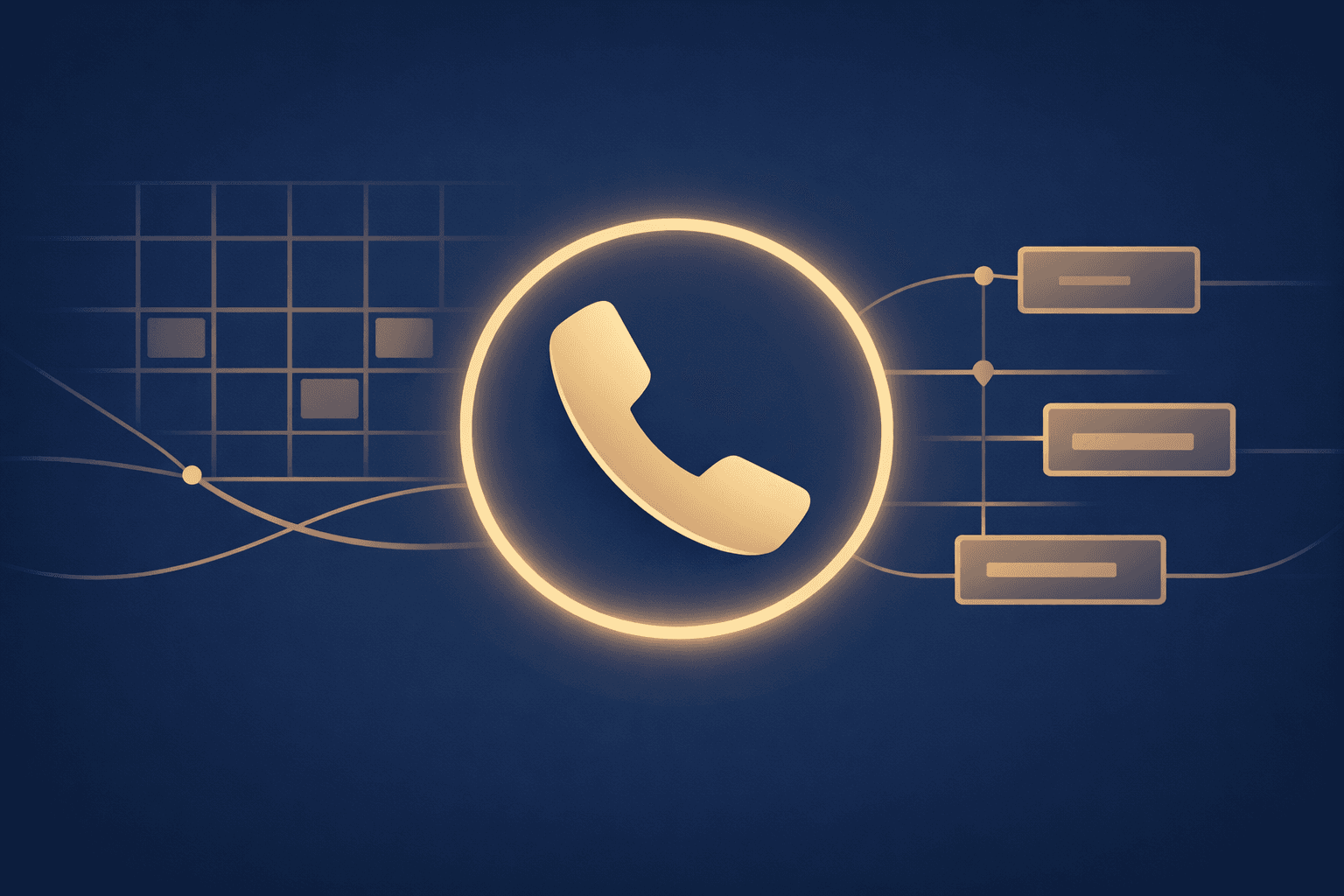
An AI receptionist that shares one system with your calendar can check availability and book directly, which means most booking calls can genuinely be handled without a transfer. But the AI needs to know which call types to own and which to escalate.
Mistake #4: Connecting the AI Without Syncing the Calendar
An AI receptionist that can't see your real-time calendar is just a fancy voicemail box. It can collect a caller's name and number, but it can't book them into an actual slot — which is the whole point.
This is especially painful for multi-provider businesses. If your AI doesn't know that Tuesday at 2pm is blocked for a specific provider, it'll book into it anyway. Then a human has to call the client back to reschedule. You've added friction, not removed it.
Fix it: Before you go live, verify the integration between your AI receptionist and your booking system is bidirectional. The AI should be able to:
- Read current availability per provider
- Create new appointments in the correct provider's column
- Respect any blocked time, break time, or custom scheduling rules
- Confirm the appointment to the caller in real time
If the integration requires a workaround or a manual sync, that gap will cost you. Push back on any provider that can't confirm bidirectional, real-time calendar access before you sign.
Mistake #5: Going Live Without Testing Real Scenarios
Most businesses test their AI receptionist by calling it once, hearing the greeting, and calling it good. That's not a test — that's a demo.
Real testing means running the AI through the actual calls it will handle:
- A new client calling to book a specific service with a specific provider
- A returning client trying to reschedule with 24 hours notice
- A caller asking about pricing for something not on your main menu
- An after-hours call on a Saturday night wanting a Sunday morning appointment
- A caller who gets confused and asks to speak to someone
If you don't test these scenarios, you'll find out about the gaps when a real client hits them — and by then, you've already lost the booking.
Fix it: Run a structured test session before launch. Have someone on your team (or a friend) role-play five to ten different caller scenarios. Document where the AI gets it right, where it stalls, and where it gives wrong information. Fix those gaps before you flip the switch.
Mistake #6: Treating Setup as a One-Time Event
Services change. Providers come and go. Prices update. Your top-booked service in March might be off-menu by August. An AI receptionist configured in January with January's information will give callers January's answers — in August.
This is a maintenance problem most businesses don't anticipate because it doesn't feel like a technology problem. It feels like basic operations. But if your AI is quoting a price that changed six months ago or booking into a provider who left in the spring, it erodes trust faster than a voicemail ever would.
Fix it: Put a quarterly review on your calendar. Thirty minutes to check:
- Is the service menu current?
- Are all active providers still reflected in the system?
- Have any hours, policies, or pricing changed?
- Are the call routing rules still accurate?
That's it. Thirty minutes, four times a year, to make sure your AI is still giving accurate information.
What Good AI Receptionist Setup Actually Looks Like
When the setup is done right, an AI receptionist operates like a well-trained team member who happens to never need a break. Calls that come in at 11pm on a Friday get handled. The frantic Saturday morning rush when three calls hit at once gets covered. The caller who wants to book with a specific provider for a specific time gets confirmed — without waiting on hold.
With Tersavia, the AI receptionist and the booking calendar are one system, so every booked call lands in the calendar the team works from. No duplicate entry. No mystery appointments. Just filled slots.
But none of that works without the configuration underneath it. The logic rules, the calendar sync, the transfer tree, the tested scenarios — that's the infrastructure that makes the AI actually useful.
Conclusion
An AI receptionist isn't plug-and-play. It's plug-and-configure. The businesses that get the most out of voice AI are the ones that treat the setup with the same care they'd give a new hire's first week: clear expectations, defined responsibilities, real scenarios practiced before the first real caller.
Get the setup right and you'll stop losing appointments to unanswered phones. Rush it, and you'll spend more time fixing caller complaints than you ever spent managing your front desk.
Take the hour. Build it properly. The math works out.
FAQ
Q: How long does it take to properly set up an AI receptionist for a small business?
A: For most appointment-based businesses, a thorough setup takes two to four hours — covering call routing rules, greeting scripts, transfer logic, calendar integration verification, and pre-launch testing. Rushing this phase is the most common reason AI receptionists underperform.
Q: Does an AI receptionist need a separate booking system?
A: Not when the receptionist and the calendar are one system, which is how Tersavia is built. The AI reads real-time availability and creates confirmed appointments in your calendar. If you're moving off Vagaro, Boulevard or Mindbody, the switching guide covers what moves.
Q: What calls should an AI receptionist always transfer to a human?
A: At minimum: client complaints or escalating frustration, medical or clinical questions, requests from clients who explicitly ask to speak with a person, and any situation the AI flags as outside its configured scope. Define these transfer triggers before go-live.
Q: How often should AI receptionist settings be updated?
A: Do a full review at least quarterly. Any time you add a service, change pricing, update hours, or lose/add a provider, update the AI immediately — not at the next scheduled review. Stale information is one of the fastest ways to lose caller trust.